Over time, Outpost developed a set of frameworks to interpret the entertainment industry. Rather than relying on a single theory of the market, each framework is a complementary view of the same ecosystem. The objective is to help reveal dynamics and generate non-obvious insights.
These frameworks serve as lenses, not primarily predictive models. They are reference points that help process change. As the industry evolves, they are repeatedly tested to see whether new developments reinforce, challenge, or refine the underlying assumptions.
1. Four Waves
2. Music as an Asset Class
3. Career Artists vs. Music Creators
4. Founder Archetypes
Four Waves
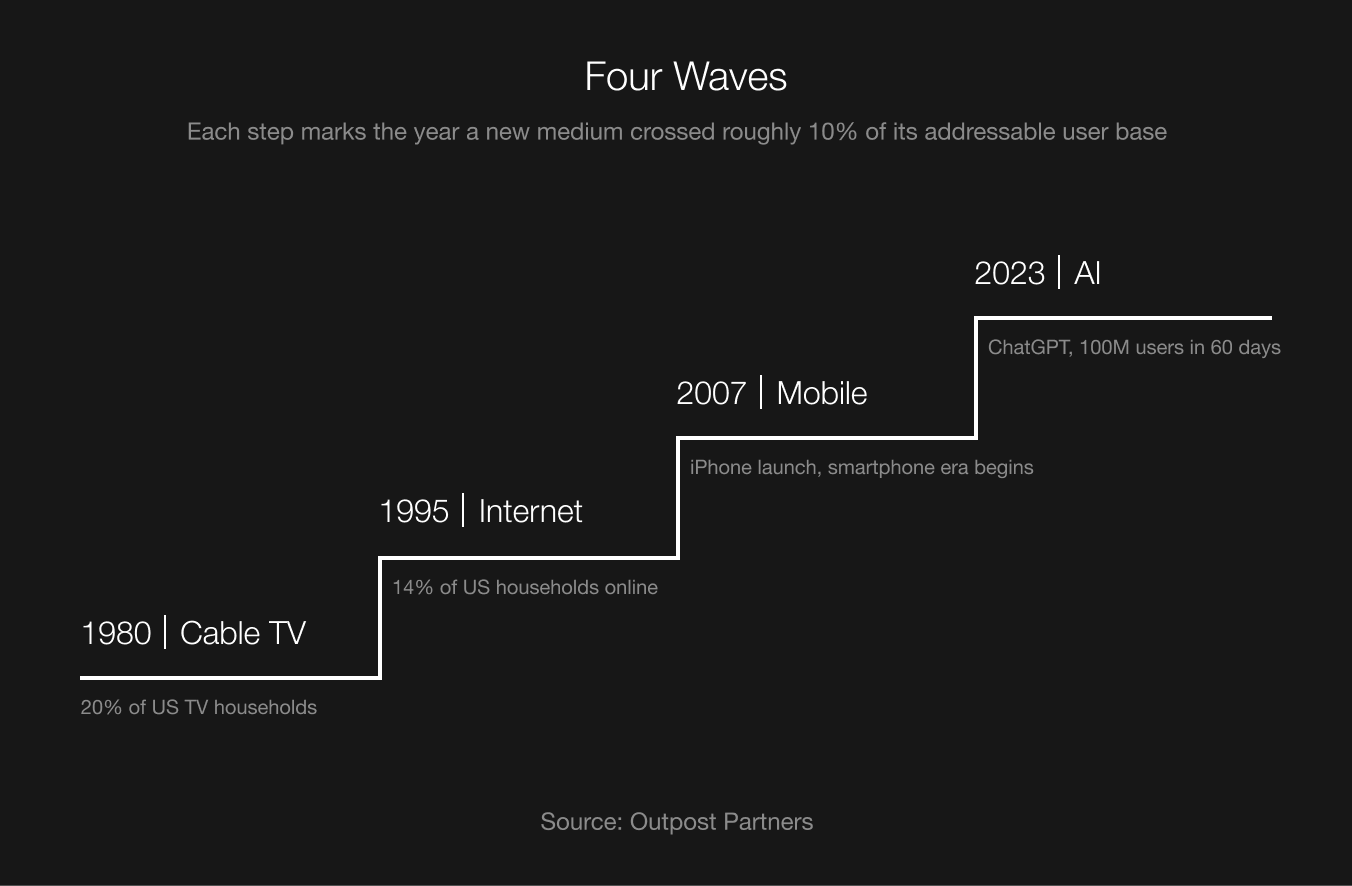
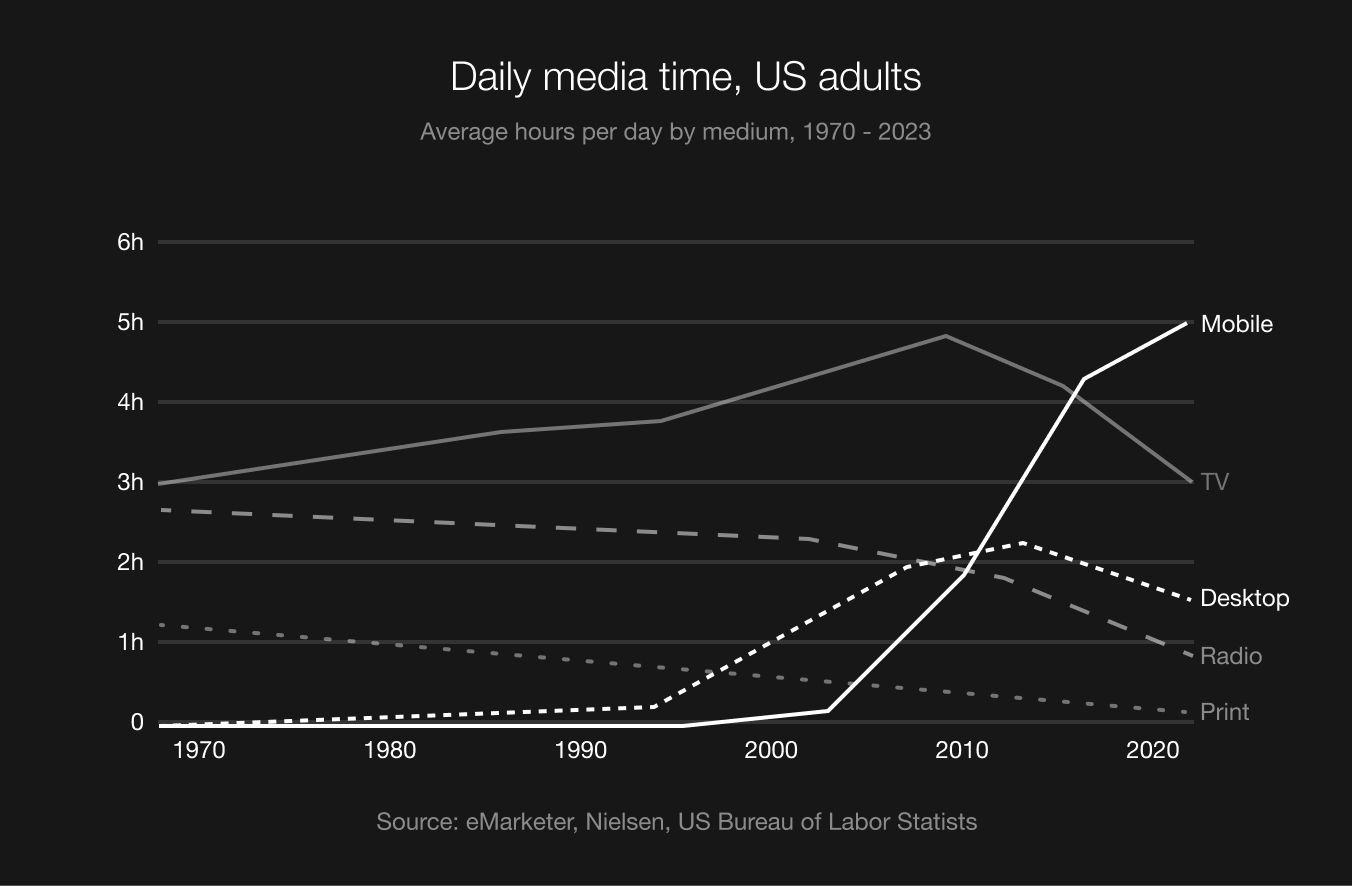
The biggest changes in entertainment are not caused by content, but by shifts in the underlying infrastructure. That infrastructure changes roughly once every generation. Since the 1980s, the industry has experienced three tectonic transitions and is now entering a fourth.
While these shifts often appear sudden, their effects unfold over decades. Legacy media decays more slowly than expected. As new generations adopt the technology, new behaviors become the norm. What initially seems niche, irrational, or impossible often becomes standard. Adoption scales, bringing new platforms, brands, and business models.
The first applications of a new medium typically imitate the medium that came before. Over time, people learn to use the medium’s unique properties, producing forms that could not exist before. AI-native formats are likely to define the next phase of the entertainment business.
Music as an Asset Class
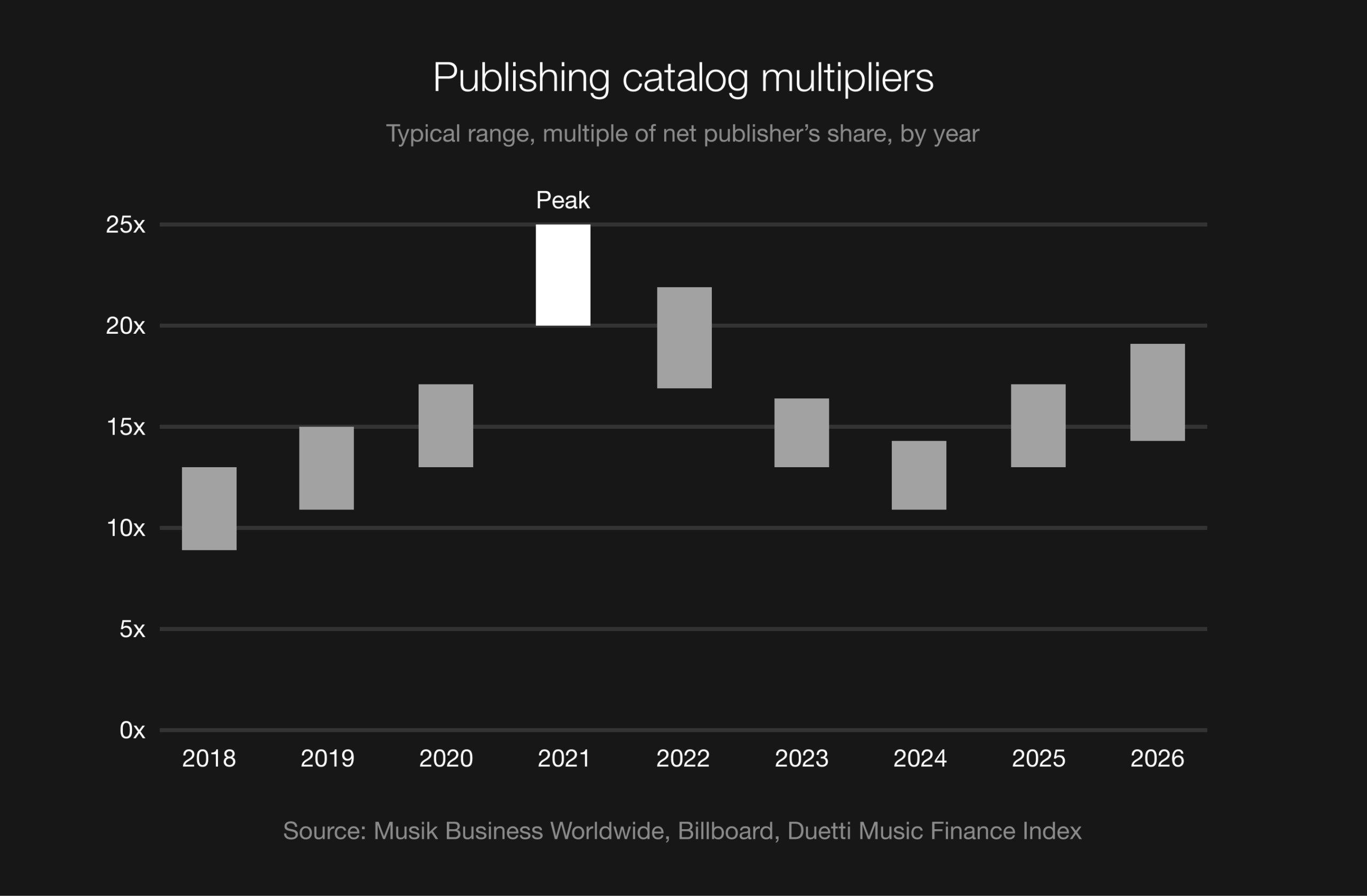
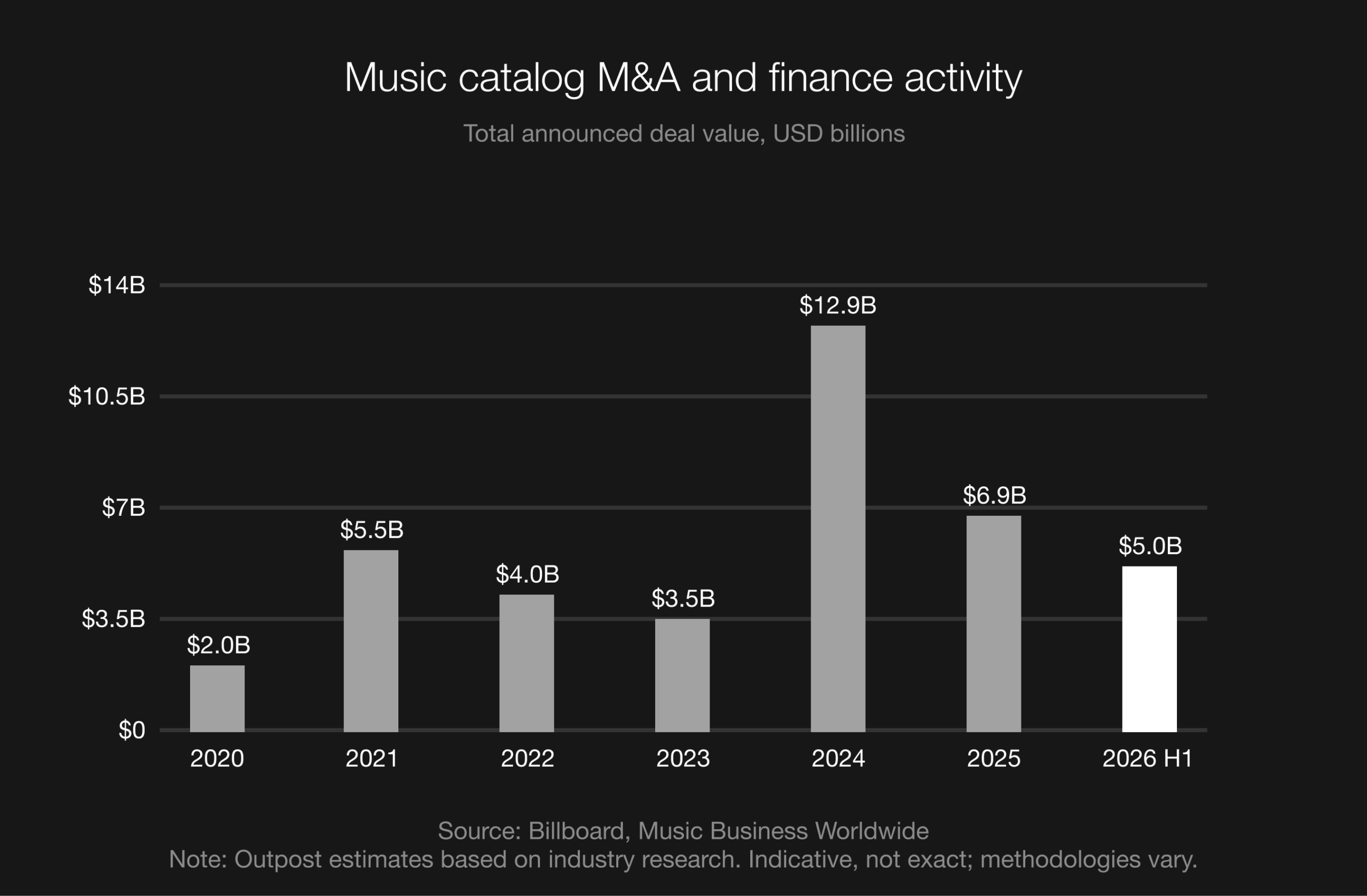
Music rights are now treated as a distinct asset class. Where investment once flowed toward new artists and new recordings, it now flows toward the acquisition of existing music rights.
Investment funds and institutional players have entered the space, paying large sums and high multiples to acquire catalogs. This has shifted the power dynamic in the industry. Financial players now hold a central role in an industry traditionally dominated by artists, managers, and label executives. The demand for catalogs becomes visible through the multiples paid, which sit well above what equity in the industry commands.
While more music enters the market each year, AI also generates new revenue opportunities for intellectual property. These changes will force labels and publishers to redefine their roles and adapt to the new reality.
Career Artists vs. Music Creators
“A decade ago, our top five artists generated over 15% of our (…) revenue. In 2022, they generated just over 5%.”
Stephen Cooper, Former CEO & Chairman of Warner Music Group
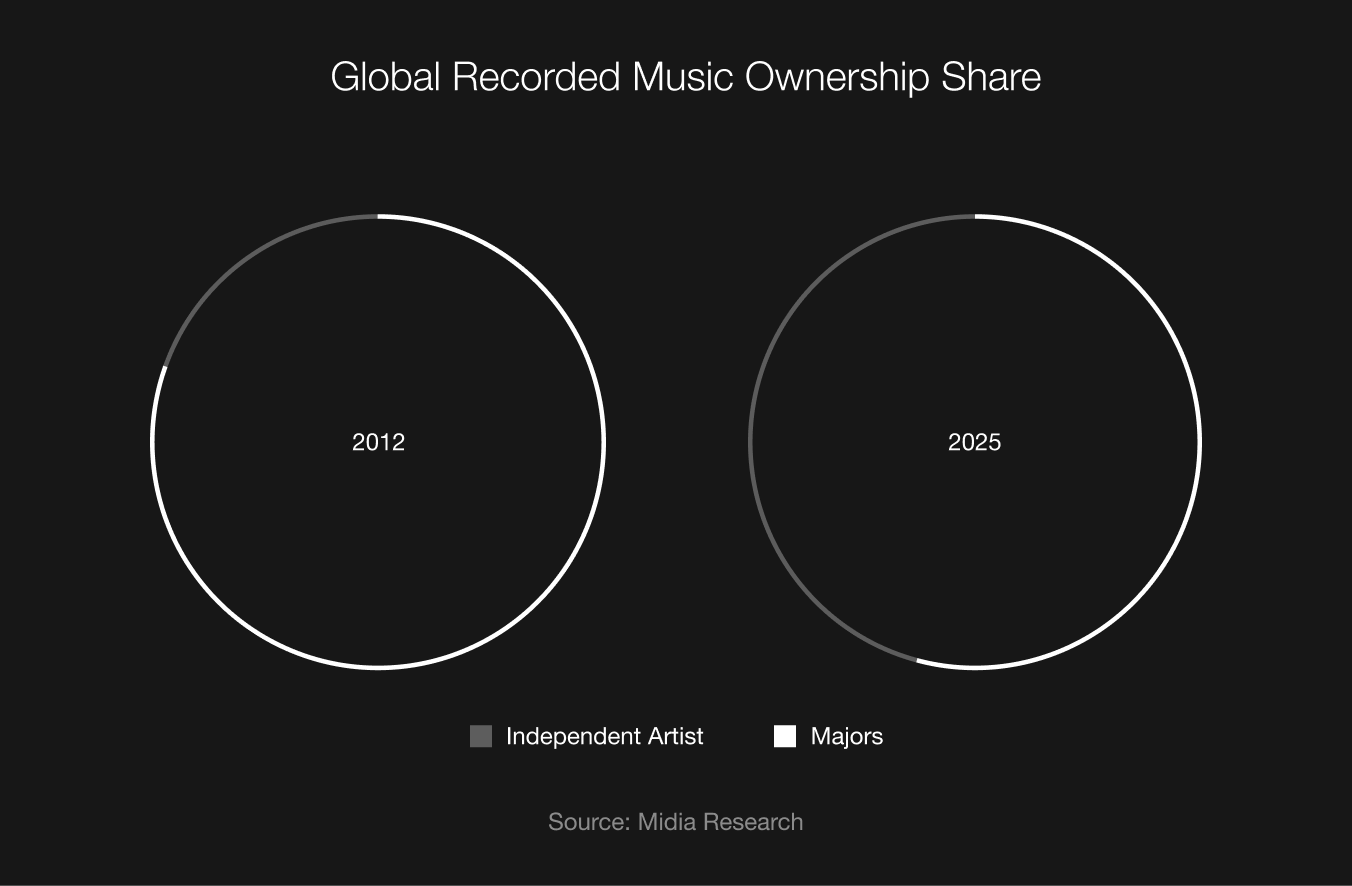
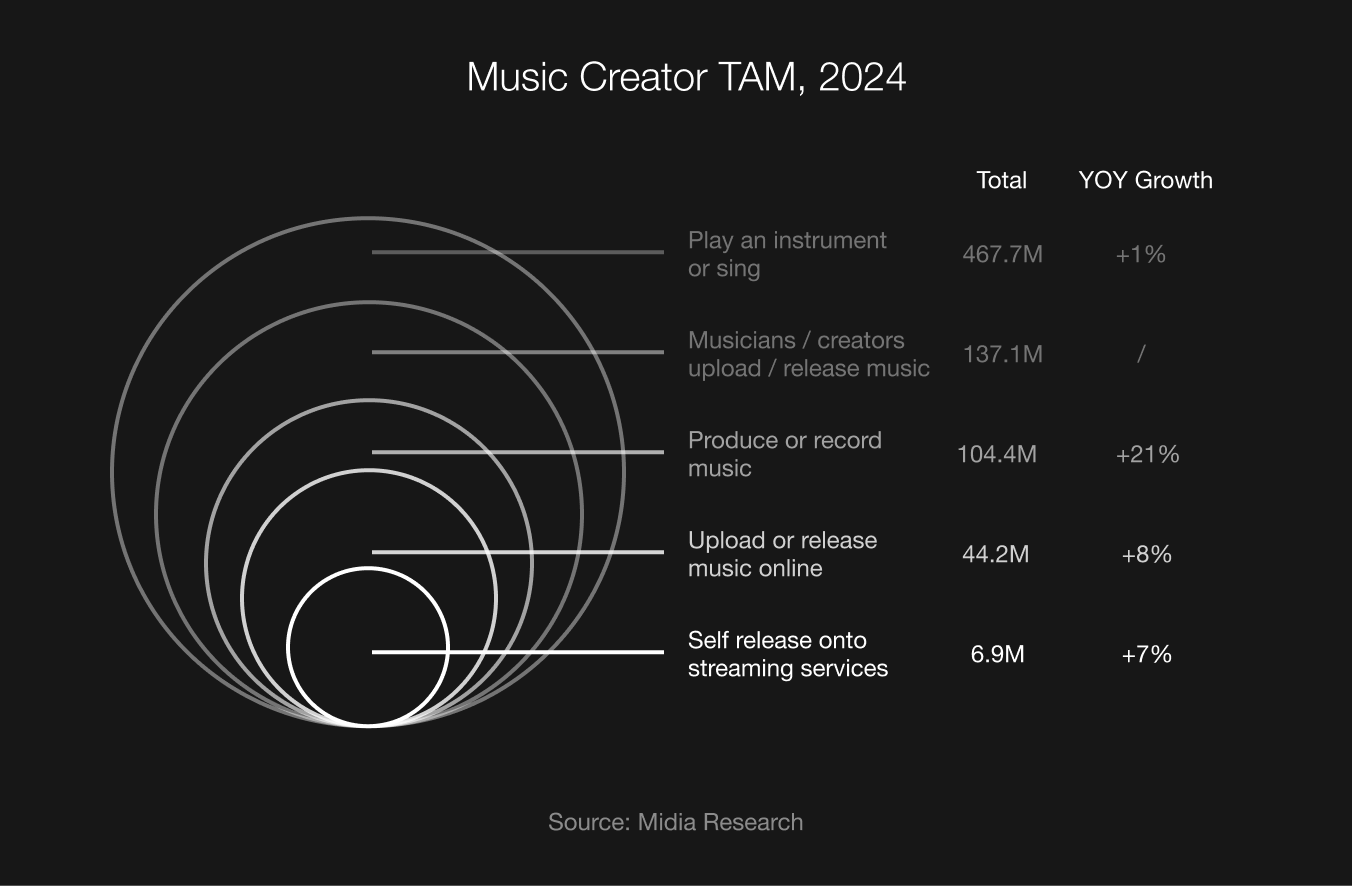
The traditional music industry classifies artists as signed or unsigned. Outpost differentiates between Career Artists and Music Creators. The key distinction is their intent.
Career Artists treat music as a calling. Emerging or established, large or small, they want to build a career. The goal is recognition, an audience built through a body of work, and commercial success. Yet the gap between the superstars and the majority continues to widen, in both attention and revenue.
Music Creators enjoy the process and the outcome of making music as a recreational practice. Rooted in the digital world, they rarely perform live. While some do monetise their work, usually most have a main occupation.
Founder Archetypes
“Creativity requires the courage to let go of certainties.”
Erich Fromm
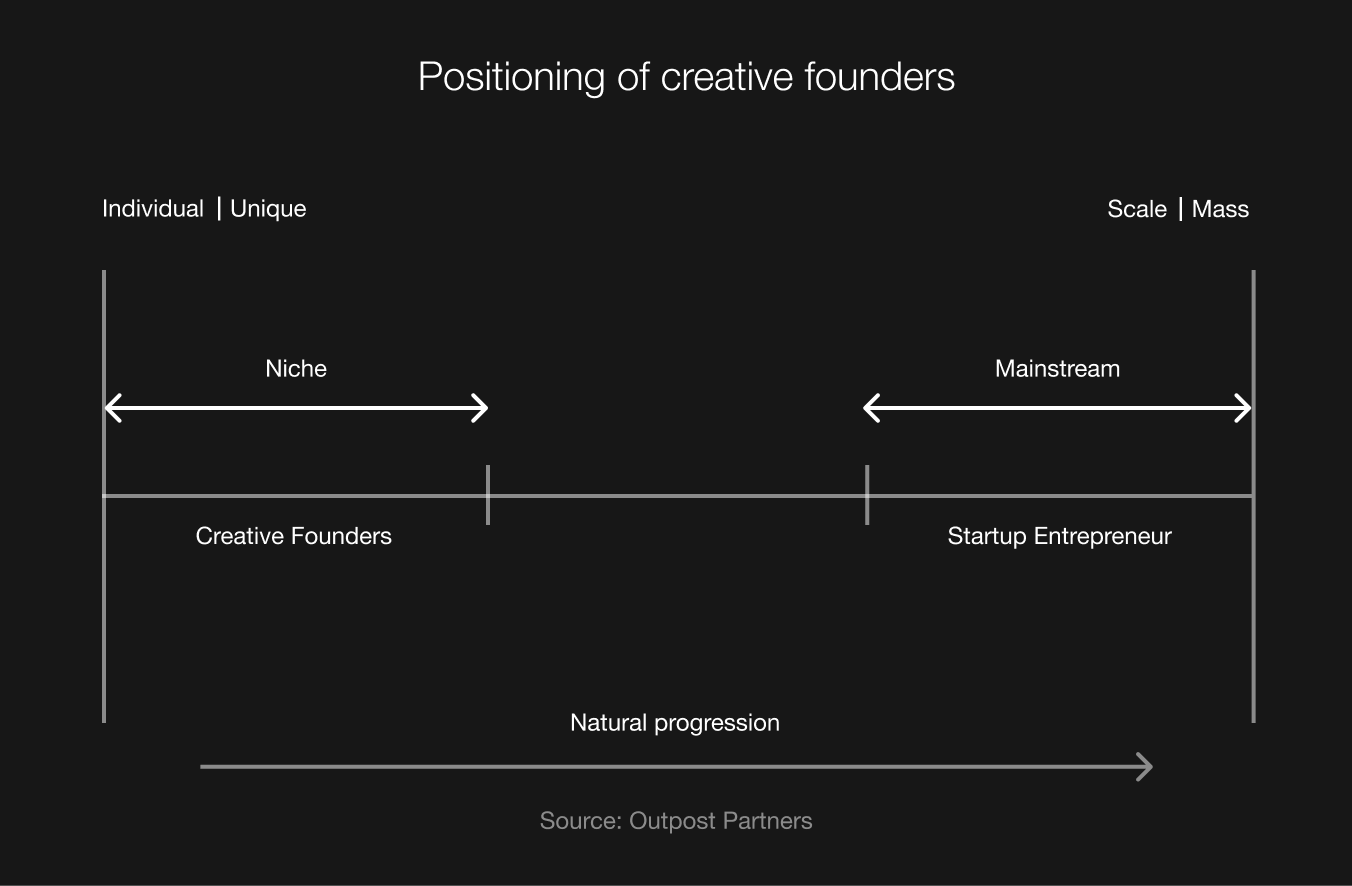
Founders with creative skills usually follow an intrinsic motivation when building a product. They create or curate content, art, or products strongly tailored to their preferences and needs, rather than trying to leverage an opportunity in the market.
Once these products find their audience and start to grow, they face a different challenge: set up corporate structures and systems that support and nurture growth, without undermining or interfering with their product, community, or audience.
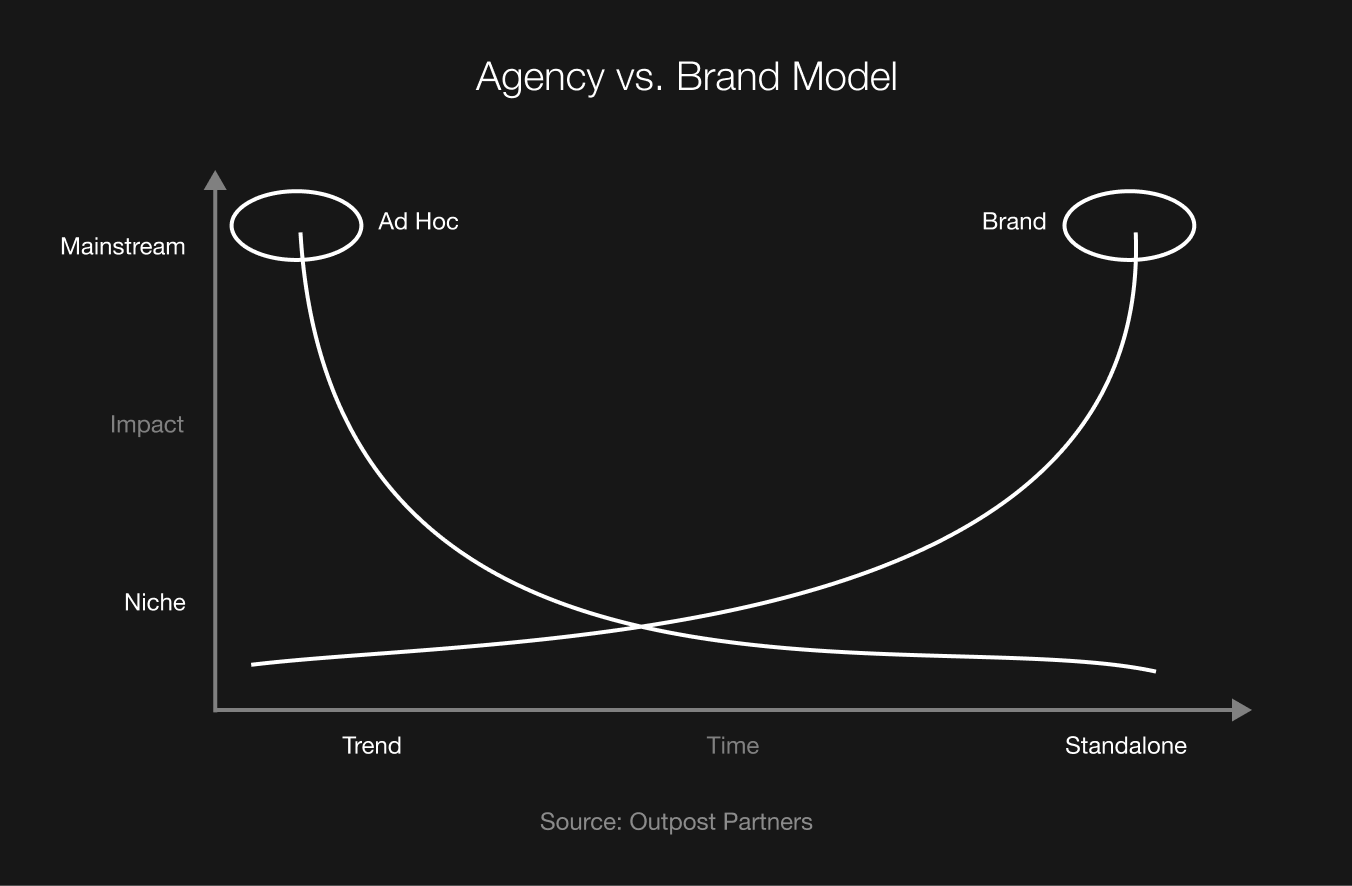
To build long-term brands, these founders walk a thin line between cultural integrity and recognition, and commercial success and exploitation. Trends may create attention, but category leaders are built on relevance that outlasts the cycle of hype.