LatAm Report
16.09.2024.13 min read
16.09.2024.13 min read
Over the last four months, Outpost Partners has conducted qualitative research in Latin America to explore the potential of digital marketing tools for the independent Latin music industry. The objective was to understand the challenges and opportunities that labels encounter in digital marketing. The research gained insight into how these independent and grass roots labels operate, their marketing processes and industry perception. Specifically, the third-party tools and platforms they use, their content strategies and budget priorities.
This comprehensive approach allowed us to gather data and shed light on the perception of digital music marketing platforms labels in the territory.
For this research, 12 Latin American record labels were interviewed, whose artists ranged from 1,000 monthly listeners to 1 million. The labels cover most music genres and a range of specialized subjects such as artist management, music production, and marketing. The interviews were conducted over virtual meetings, each for a minimum of 1 hour. The labels came from the Spanish-speaking (Andean) region, predominantly Colombia, Peru and Chile. Brazilian labels were not included in this research. The interviews included 14 initial questions across 7 topics. These questions covered strategic fields such as marketing processes, challenges, priorities, budget distribution, performance measurement, and third-party tools (e.g. playlisting). The questions around third-party tools focused on marketing platforms and predominantly how these were used to make an impact on Spotify, YouTube and social media.
The Latin American music industry is growing and shouldn’t be overlooked. Listeners and professionals alike are discovering what artists from that region are producing, and starting to realize the potential ready to unfurl.
As a whole, the music industry is booming again, with global recorded music producing a whopping $28.6B in revenue in 2023, a 10.2% increase from the previous year. Revenue from subscriptions, representing the lion’s share, is also up 11.2%, thanks to the 677M paying users from around the globe.
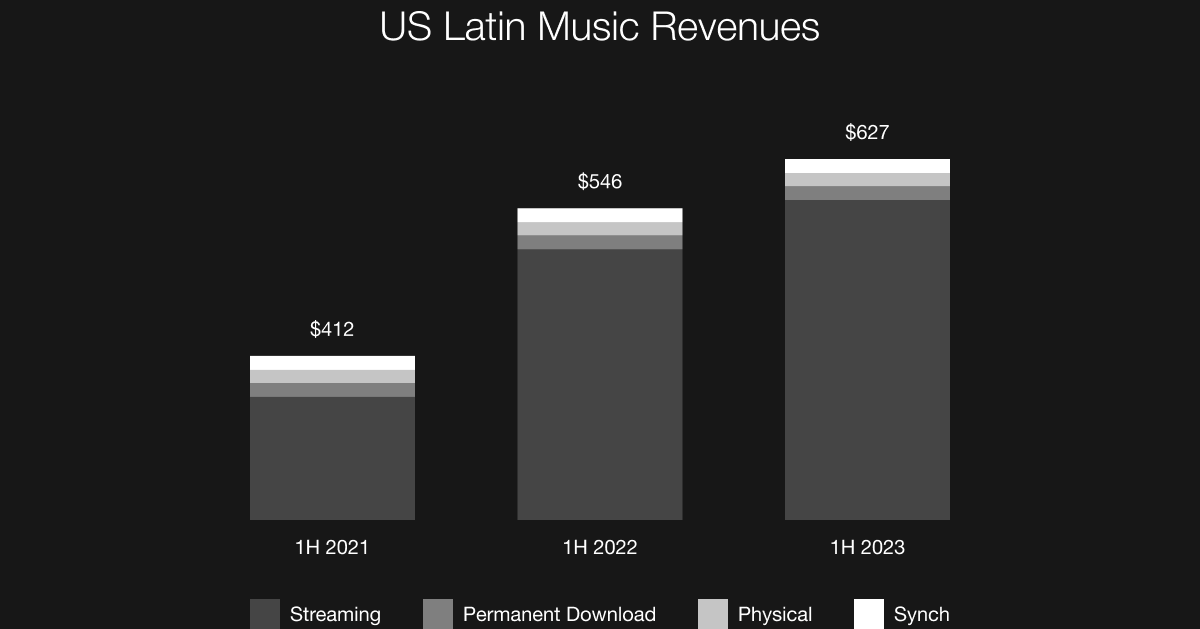
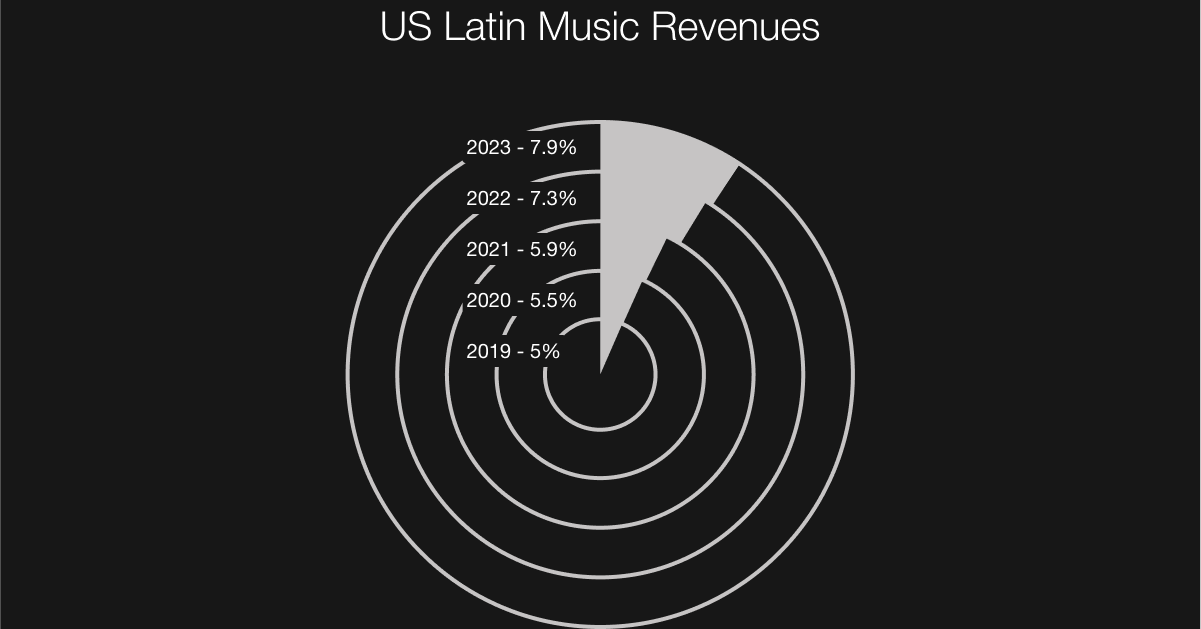
One of the most significant contributors of this growth is the Latin American market which has grown 19.4%. To compare, the US & Canada market grew 7.4%, Europe saw 8.9% growth, and Asia saw 14.9%. In the US alone, Latin music generated $627M in gross revenue in the first 6 months of 2023. Plus, its share of the US’s recorded music grew from 7.1% to 7.5% in the same timeframe. Latin music has also surpassed $1B in gross revenue for the second consecutive year, reaching $1.4B. This equates to a 7.9% share of total gross revenue in the music industry for that year. A number that has been consistently growing–2019 saw it have a 5% share.
Within a decade, global Latin music listeners have grown by almost 1,000% on Spotify thanks to artists like Bad Bunny, Karol G, and Peso Pluma. In 2013, no Latin songs made Spotify’s Top 100. In 2023, 1 in 5 were. Latin America produces superstars.
When trying to encourage musicians to work with them, labels often claim to have a “good relationship” with Spotify editors who manage Spotify’s large in-house editorial playlists. As labels are aware of the hesitancy surrounding non-editorial playlisting, this works as a bargaining chip to get artists on board.
Assuming this is true, some artists change label and distribution partners based on this promise, as they don’t have marketing opportunities themselves. This is pretty significant and shows how important editorial playlisting is still perceived to be for artists, Latin American or otherwise. This also shows the lack of opportunity to market songs on the DSPs, given editorial seems the only way for most of the interviewed parties.
From the research, it’s noteworthy that both artists and labels have a general unawareness of alternative playlist-pitching platforms and practices.
Generally, most of the labels interviewed were avoidant of utility platforms, even of larger and more established ones such as Chartmetric or Awario. These are tools that can help optimize processes at all stages of the marketing funnel. One reason was that most utility platforms with a reliable and known reputation are from the US and Europe. Therefore, they aren’t tailored to LatAm users, for example by language, as effectively as others.
One of the biggest obstacles faced by LatAm artists when hoping to use these platforms is price. Average wages in the US and Europe outweigh most Latin countries, often significantly. This makes most utility platforms inaccessible to artists from that region.
A lack of awareness paired with inaccessibility has made these utility platforms, especially the ones around third-party playlisting, an almost impossible strategy for many artists living and working in LatAm countries.
Language, price, and general unawareness are the three main obstacles that LatAm artists face when seeking out platforms to utilize.
Content creation was mentioned and included in every interviewed label’s strategy. In the modern age of marketing, producing content for social media has become a must-have for artists and labels. Almost all labels included content creation in their marketing budgets to varying degrees.
On average, 60% of marketing budgets were dedicated to content creation. 30% to paid ads, 10% to other costs.
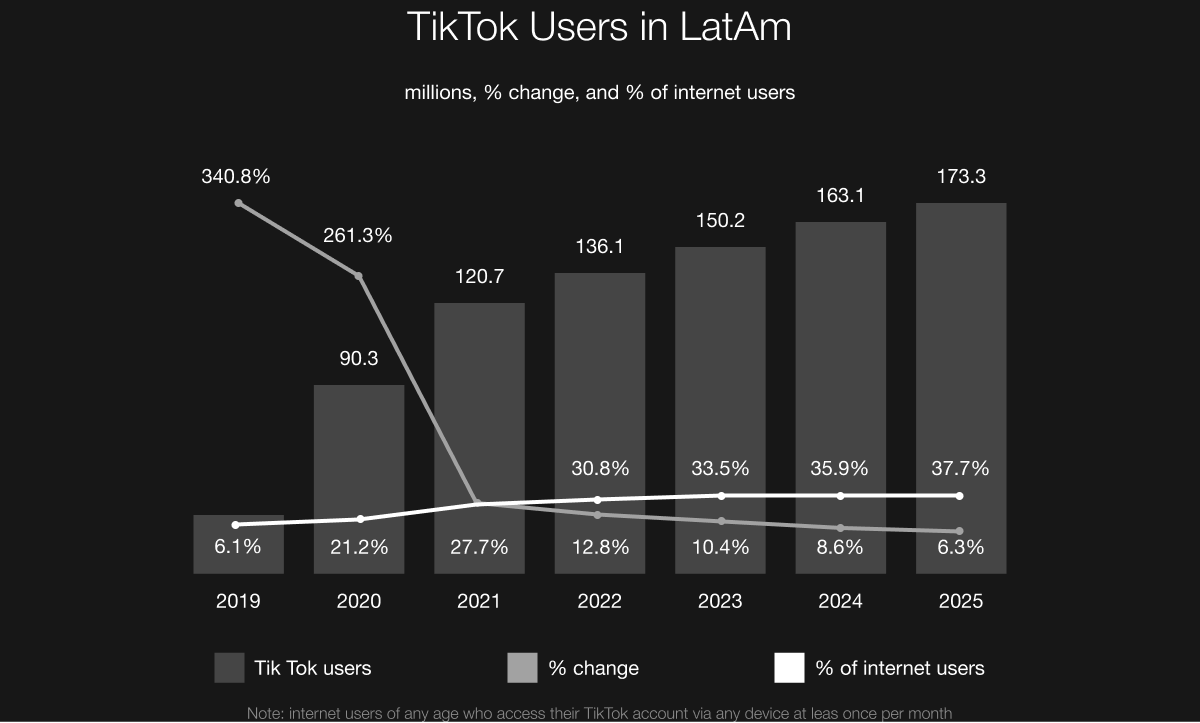
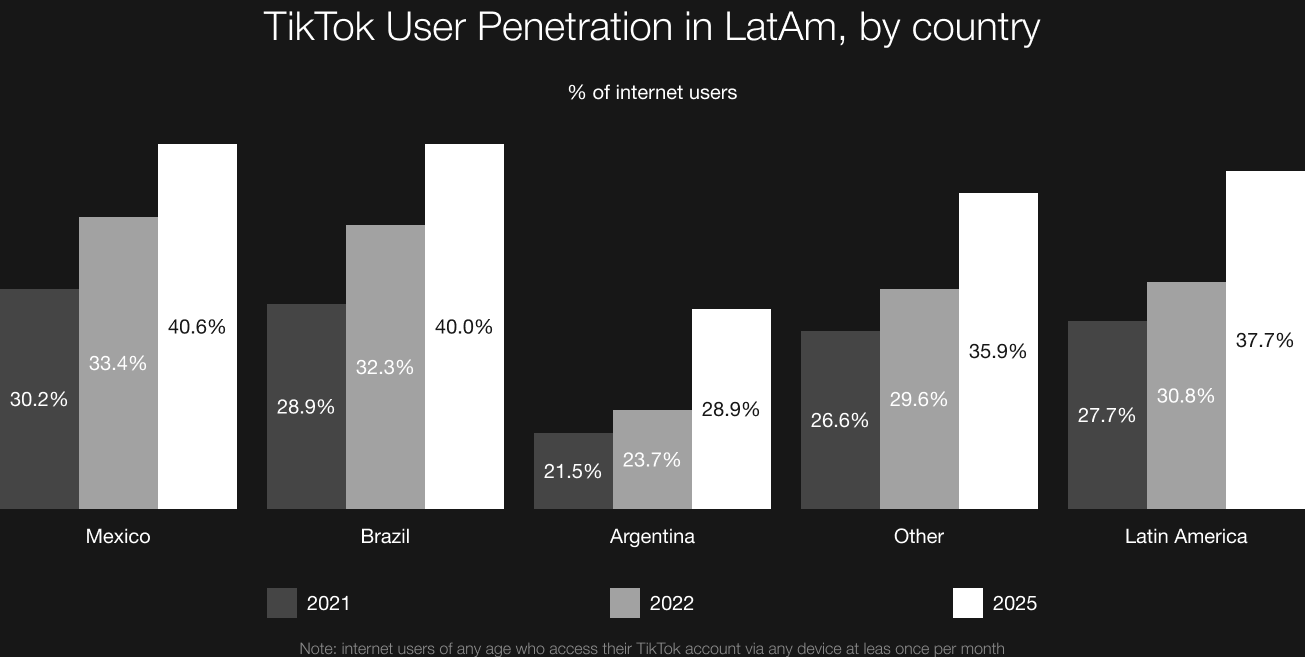
Platforms like TikTok, Instagram Reels, and YouTube Shorts were considered the main focus for content reach with the hopes of going viral. This leans into the global popularity of short-form video content which has dominated social media over the past few years. U.S. artists like Lil Nas X, Doja Cat, and PinkPantheress all have TikTok to thank for boosting their careers. In fact, TikTok users are almost twice as likely to discover music on its platform compared to other social media, and 46% of those users listen to music that’s not in English. The platform has seen massive growth in the territory and has quickly become the number one social network and content discovery tool. Static formats such as images, carousels, and countdowns are considered important by labels depending on the goal of the campaign. Most said that the metrics you’re optimizing for have impacted what media style you pick and content you produce.
Paid ads are a principal part of each label’s marketing strategies with most opting for YouTube. The platform was noted to have a more effective cost-per-conversion rate compared to other platforms such as Instagram and Spotify. Labels use a mix of running ads from scratch based on a new release and boosting already established content that has performed well organically.
As to what is being promoted, almost every label referred to marketing a new release, rather than trying to gain interest in an artist’s full catalog. The only way they promote “old” music is through organic content creation but most suggested that this was to ramp up content rather than being part of a separate strategy. The differentiation between catalog and new releases also seems arbitrary, as catalog usually refers to songs that are currently not being marketed.
As music streaming has become popular in the territory, and musicians are looking for opportunities to promote their music, scammers have sensed the opportunity. And so, more dishonest practices such as payola (taking money for placements on playlists) or botted playlists have made themselves known throughout the industry.
Emerging artists who haven’t fully explored the marketing side of music have fallen victim to these scams, handing over money without realizing the potential consequences that follow. In some cases, they believe this is a normal part of the promotion process, not something that raises red flags. False opportunities from pages that guarantee streams, engagement and growth are professionally designed and precisely targeted via ads and reach outs. legitimate platforms are being shown side by side with these false opportunities – making it hard to tell the difference between legit and illegitimate platforms.
More seasoned artists, and their labels, are familiar with these kinds of scams and know how to avoid them. Yet, the knock-on effect means artists mistrust most players, tools and practices that aren’t editorial or tied to a larger platform. The lack of education surrounding what is and isn’t allowed feeds into their fear when working with agencies who incorporate digital tools to engage communities or third-party playlist pitching as part of their campaign strategies.
Some of the labels interviewed stated that they recommend their artists avoid partnerships with independent platforms or playlists altogether. This is the general reaction for most labels as they are concerned about the potential penalisation streaming services could issue to their artists.
When analyzing the success of their campaigns, the interviewed labels mentioned stream count as their most important metric to measure a campaign’s performance. This is likely because it is the end result–it measures if a campaign has done what it set out to do and pulled in results (streams).
However, it is not the only metric labels look at. They are also interested in likes, playlist adds, and follows to get a more rounded view of their advertising efforts, especially if they are working long term with artists and are not only single focused.
It’s important to remember that stream counts do not necessarily indicate retention and can be more fleeting than other numbers. An artist may have a bump in streaming numbers for a brief interval and then it might plateau once a campaign has ended.
In the long run, this is not a desirable outcome as it indicates that lasting interest in the song or artist has dwindled. Taking into account other key performance indicators (KPIs) such as playlist adds or following an artist page is a more stable sign of whether a campaign has reached the right audience.
Some labels noted that they believe follower count is the most important metric. If a song has been added to a playlist and the artist has received a follow it seems reasonable to assume that the song will probably be streamed multiple times.
It also means that new tracks from the artist will most likely appear on the user’s “Release Radar” playlist -increasing the chances of the listener discovering and streaming new songs.
For a song to be considered a success, labels should look at how the song performs on streaming services in the weeks following the release rather than just the initial streaming numbers. This is only partially in practice for LatAm – most labels only monitor metrics a couple of weeks after the release to determine the campaign’s success and stop there, switching attention to the next release.
Advertising is a key component of every campaign, as it is the only tool to provide scale at demand. Content creation (mostly done in-house) and distribution is a priority for most labels, especially as they lack opportunities outside of advertising (costly) and larger content campaigns (agencies). Those who are aware of outside opportunities are mostly skeptical of third-party platforms – especially the ones facilitating partnerships with curators who provide reach and relevance on demand-side platforms (e.g. playlisting and DSP promotion). Their concern and fear circles around potential bots and scammers. The market has previously seen massive botted campaigns and Spotify as well as distributors have started to proactively take down songs they believe are engaging in these practices.
Latin American music is quickly becoming one of the most important sectors of the music industry – for artists and labels, but also companies and startups providing digital marketing tools. If these platforms can adjust the pricing to fit the territory, and also offer their products and services in different local languages for an easier onboarding and experience, they could potentially see more traction in the market.
While scams and shady actors have and will always be present, it might not be wise for labels to dismiss an entire marketing strategy just to avoid them. Instead, they should consider investing time researching different tools and platforms that offer a better understanding of streaming numbers and where those streams are coming from. This would streamline the marketing process and, in the long run, save time and money.
Outpost Partners Holding Inc. supports founders in navigating the complexities of the creative industries by providing expertise in corporate development, strategic finance, and leadership. We focus on operational excellence and long-term growth. Our team consists of executives from the music business, venture capital, and management. How we do things is equally important as the outcome.
This website uses cookies to improve user experience. To learn more take a look at our Privacy policy.
By selecting "Accept cookies" on this banner, you agree to the use and storage of cookies on your device.