Music Tech Report 2025
08.07.2025.15 min read
08.07.2025.15 min read
At this year’s Outpost Partners Music Business Summit—held June 12–14 at Sónar Festival in Barcelona—Andrés Lauer and Julian Mazoteras delivered keynote presentations. Andrés focused on trends in venture capital, music tech, and recorded music, while Julian explored the evolving role of IP and live companies in today’s fragmented music economy.
This post is the first in a three-part series unpacking the summit presentations. It focuses on the classification of music tech startups and shares what Outpost has learned after tracking and evaluating hundreds of companies over the past two years.
This series is structured across three blog posts:
Before proceeding, it is useful to provide context on Outpost Partners and our approach to working with companies across the music and entertainment landscape.
Outpost Partners supports founders building companies across the broader music, technology, and entertainment landscape.While these businesses differ in many ways, they tend to face similar challenges. the most common one: how do we get funded?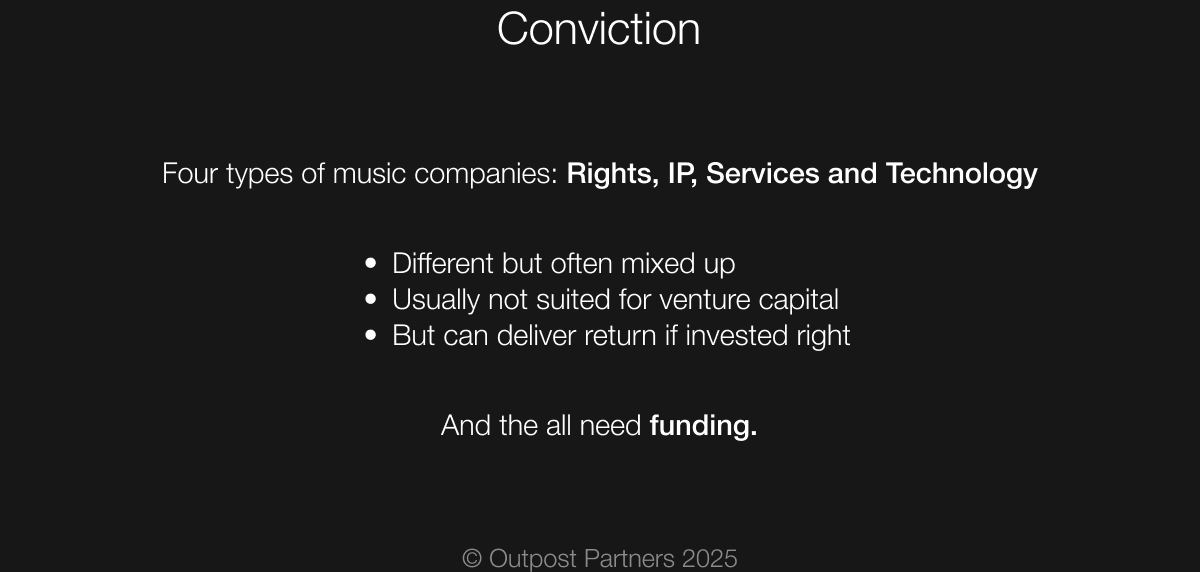
Most of these companies don’t fit the traditional venture capital model — but can still generate strong, sustainable returns if invested in or engaged with the right way. The question, then, is: how do you invest in them effectively?
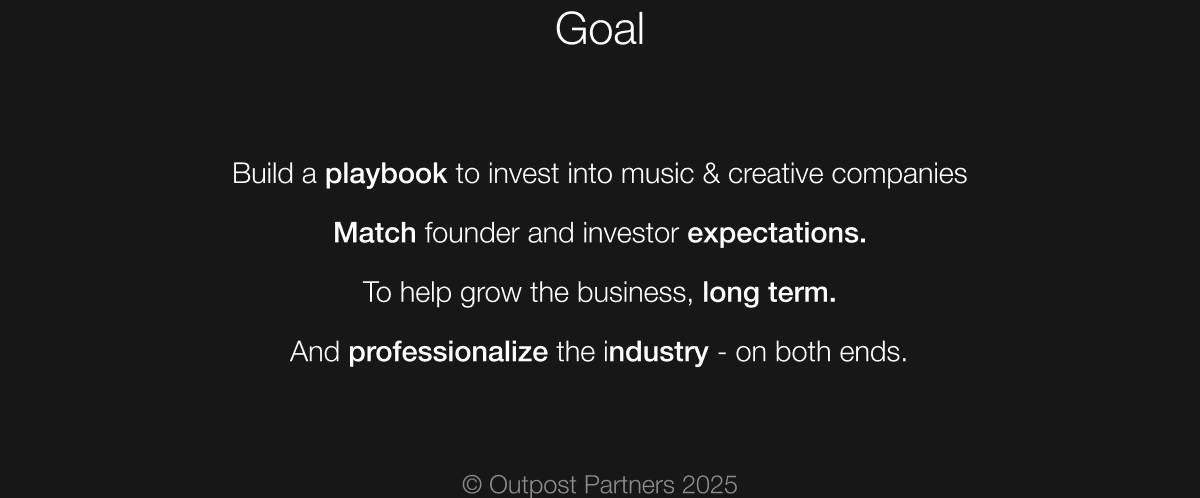
Outpost helps creative businesses match the right capital to the right stage. A core challenge is aligning founder and investor expectations early—often unlocking long-term, sustainable growth. The goal is to professionalize the industry and get more companies funded on the right terms.
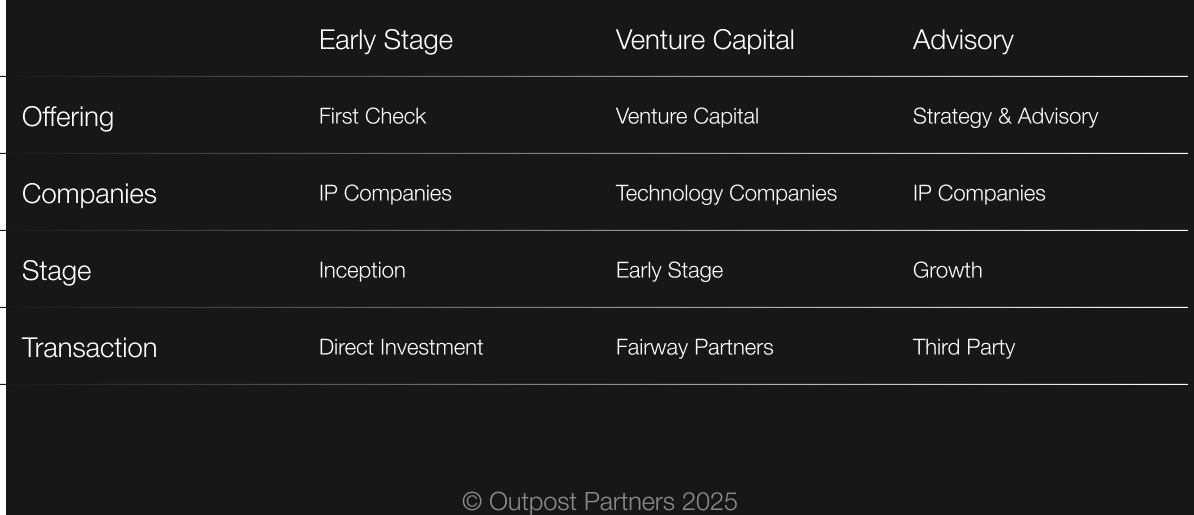
Outpost offers three distinct products and services, tailored to different stages of growth:
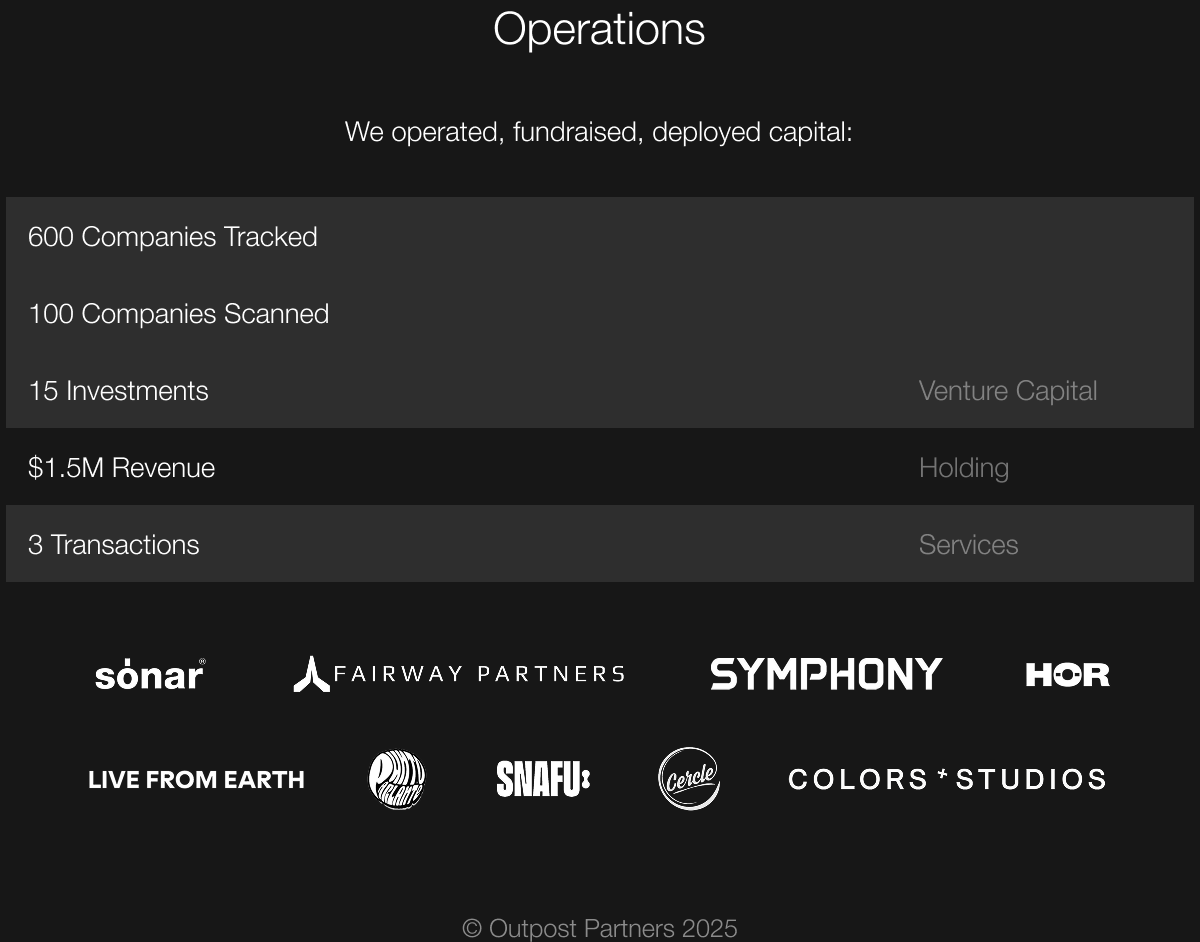
Over the past two years, Outpost tracked more than 600 companies, actively scanned over 100 opportunities, and completed 15+ investments through it’s sister venture firm, Fairway Partners Capital.
The companies Outpost helped launch have collectively generated over $1.5 million in revenue, and the company facilitated three major transactions—each involving a change of ownership greater than 25%.
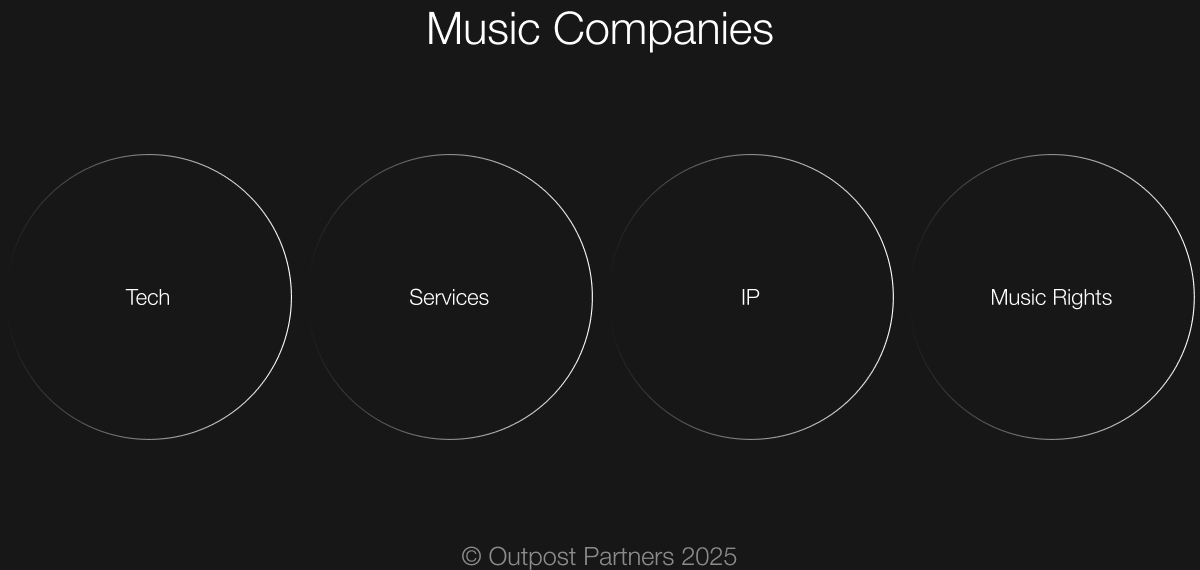
Internally, we segment companies into four types across the broader music, technology, rights, and experience ecosystem:
Many companies start with a clear focus—tech, content, or live—but often expand into other segments. Platforms launch labels, and labels develop service infrastructure for others.
When it comes to the music market, we define it in clear, practical terms—grouped and ranked by estimated market size:
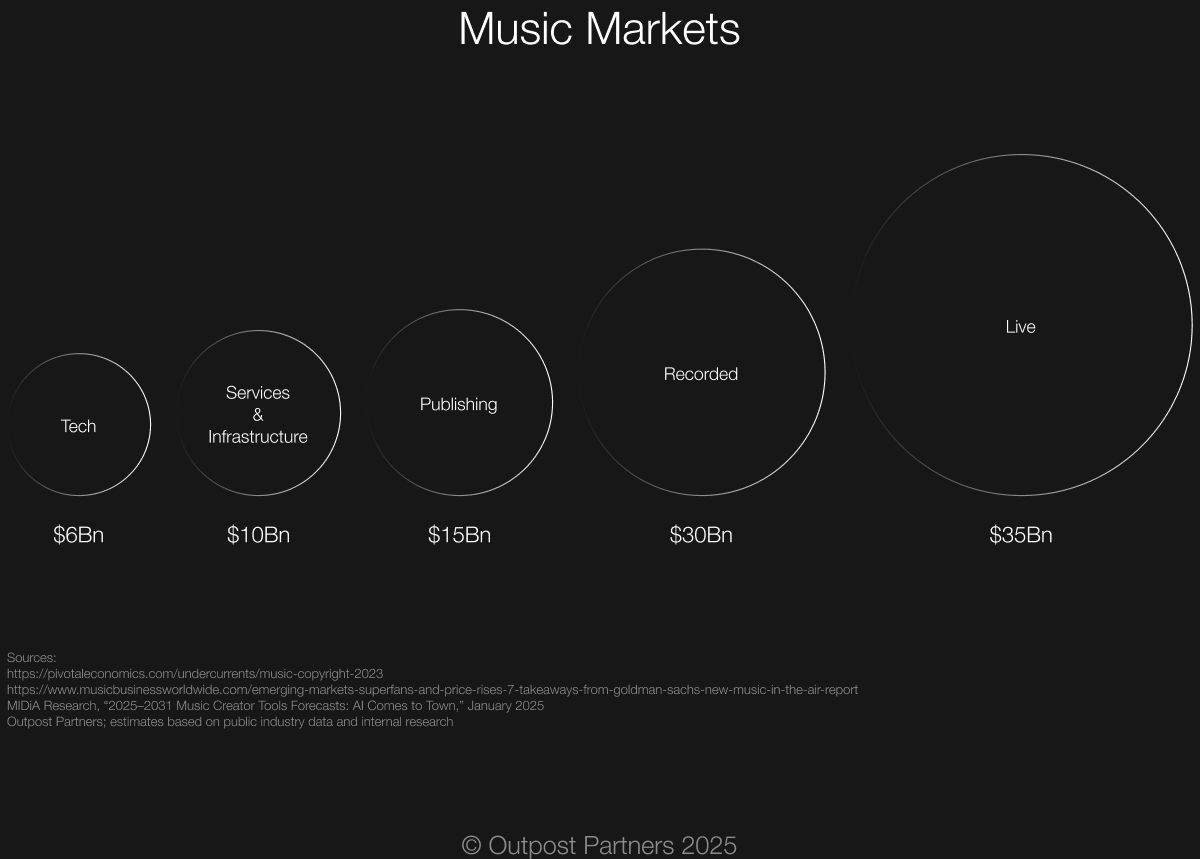
Note: Our market estimates are based on leading industry research, supported by our own internal analysis. We prioritize actionable insight over academic precision, staying grounded in our work as operators and strategists.
Mapping a company to these market segments helps clarify its positioning and potential. We often encourage founders to do this exercise to clearly articulate what they offer and how they create value. A mapped view of companies in our scope outlines the current landscape:
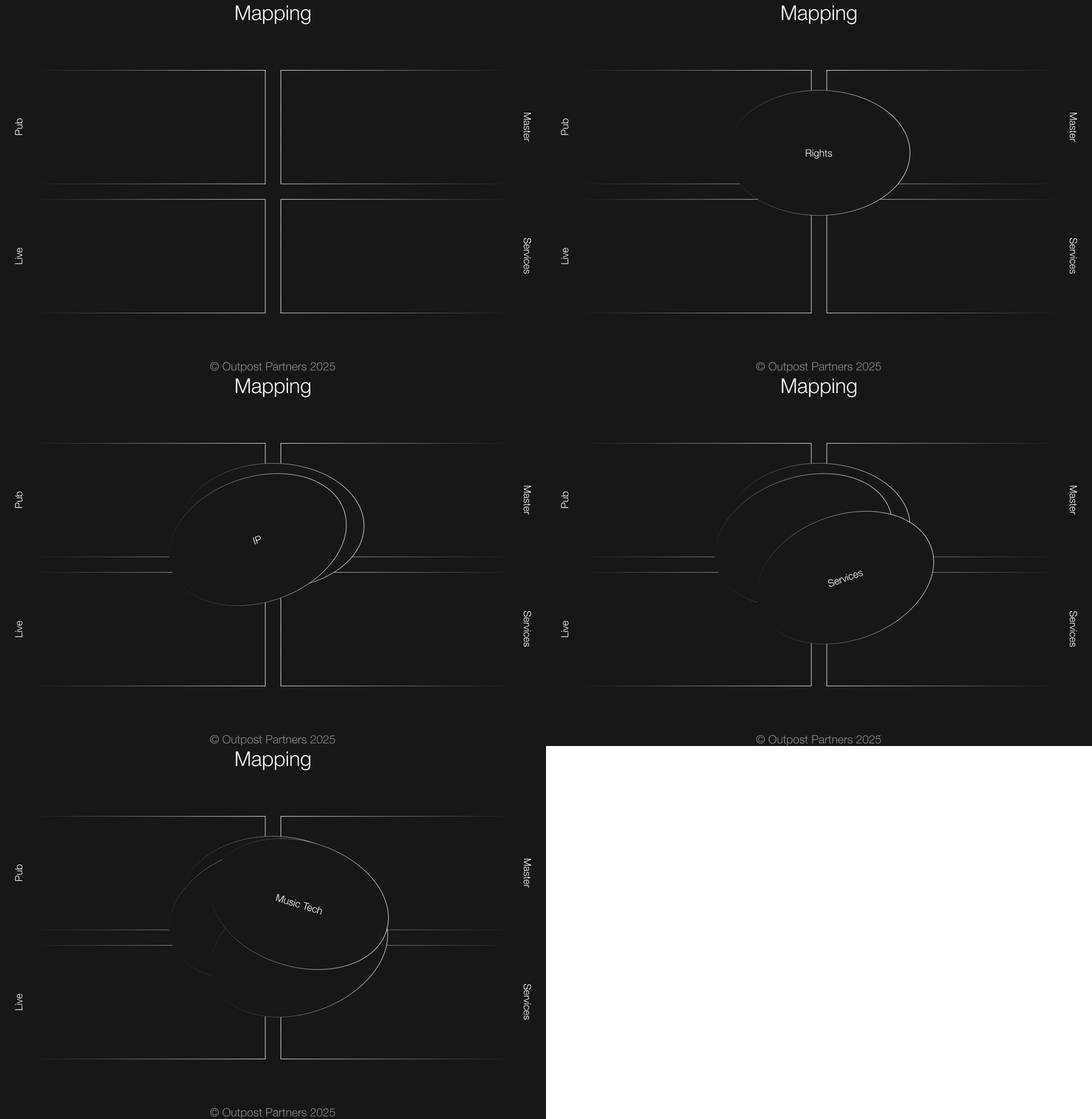
This section focuses on Music Tech companies and our internal analysis of deal flow within that category. We define Music Tech companies as technology startups whose core value lies in music-related products or services. At Outpost, we typically segment this space into three distinct categories:
As investors, we receive a high volume of music tech pitches. To manage this, we’ve built internal systems to track and continuously update company information—using tools like Miro, Google Workspace, and Airtable (System).
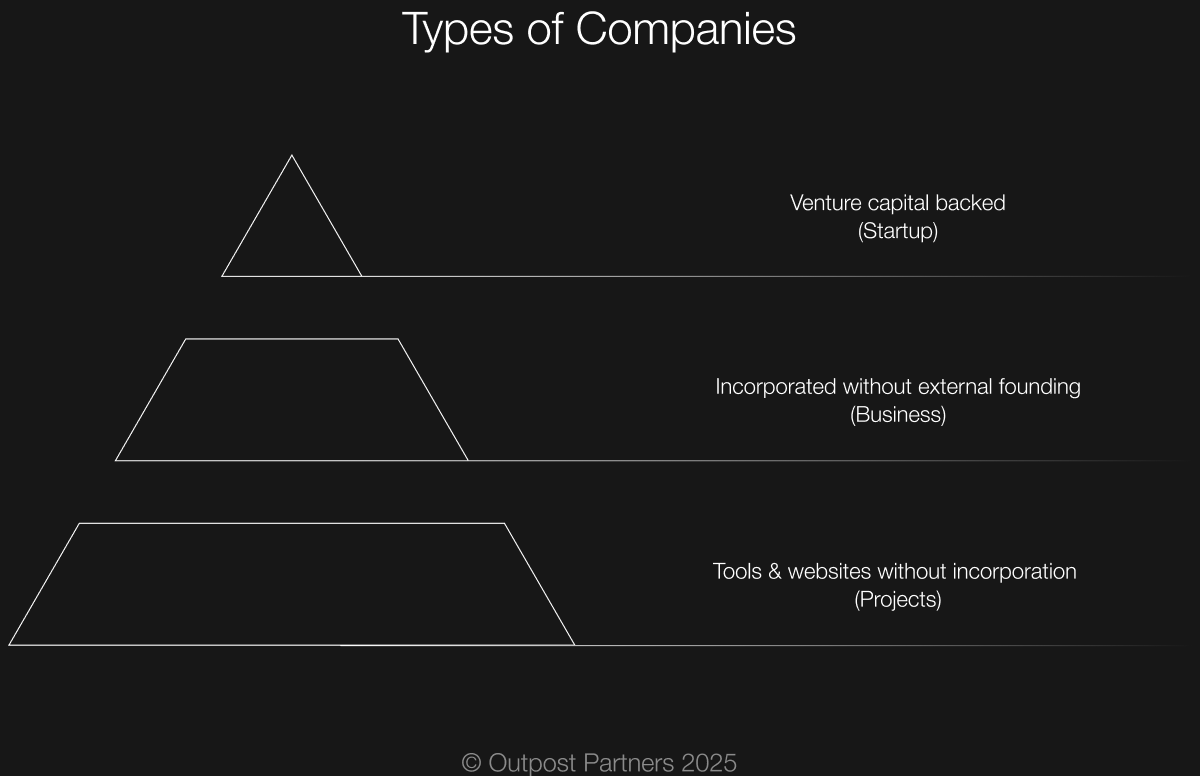
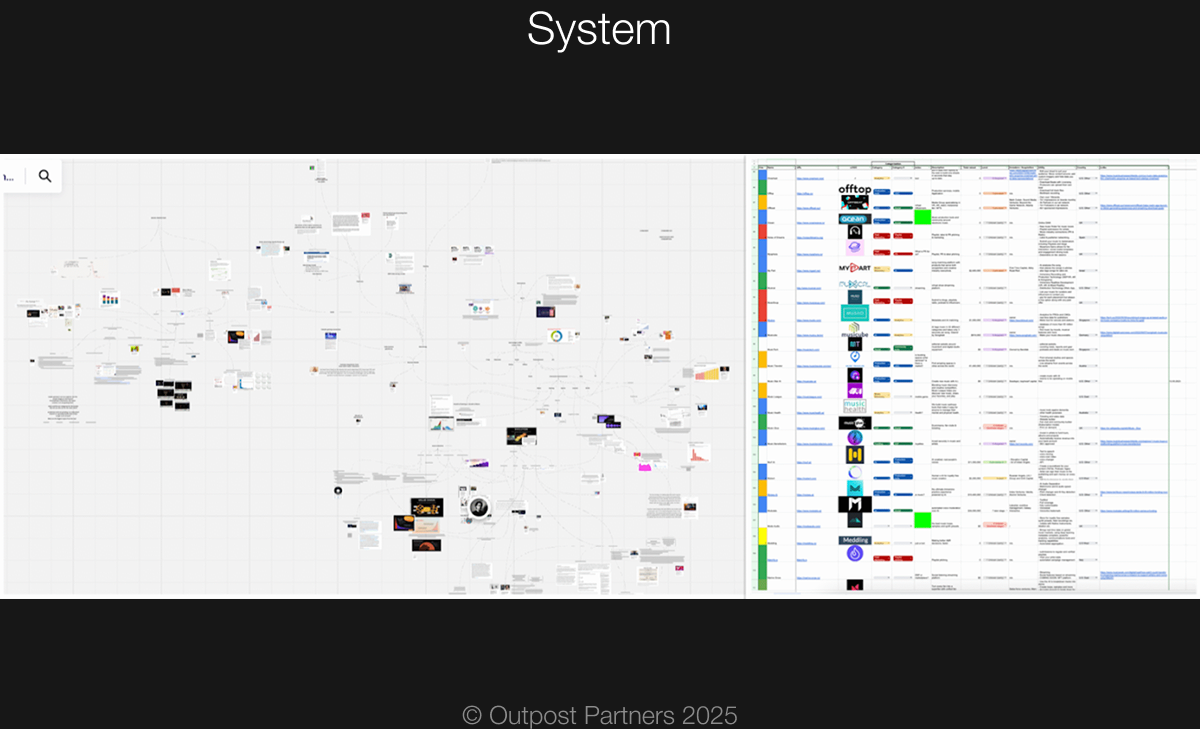
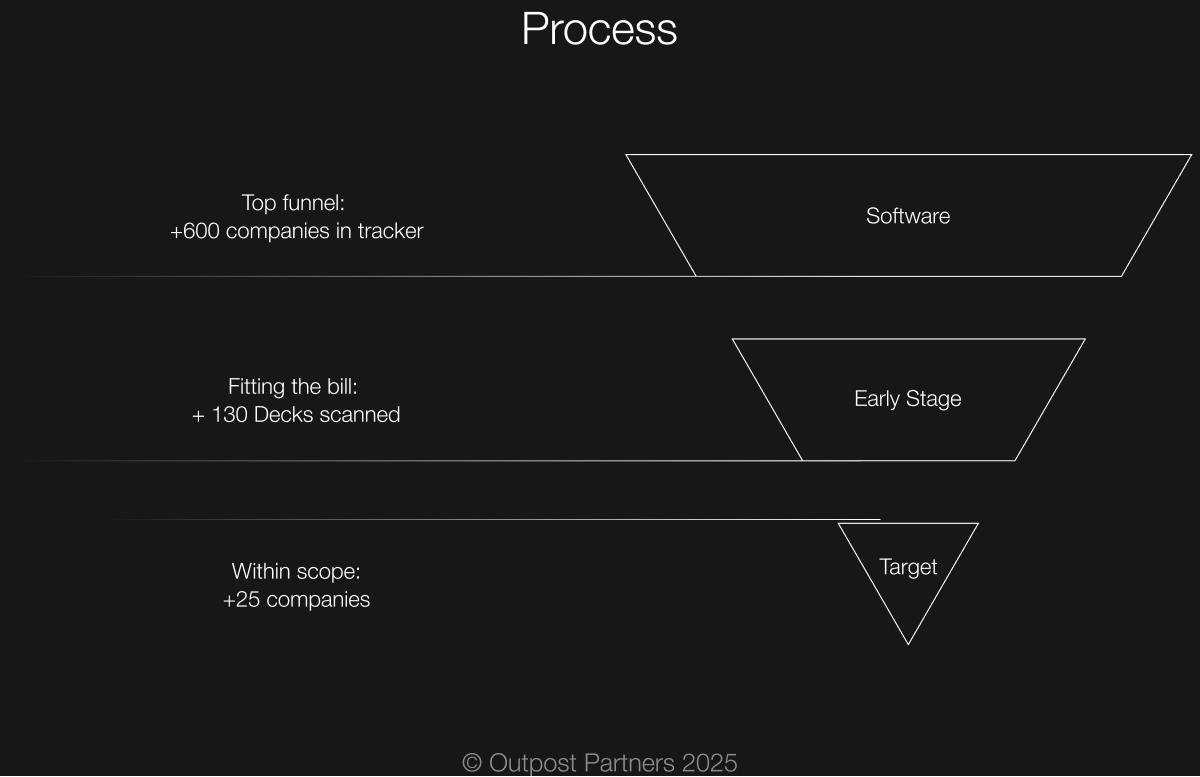
We’ve built an internal database by aggregating deal flow, conducting independent research, and leveraging our network. Our top funnel includes over 600 companies and projects, which we track using a combination of third-party sources and direct information from the companies themselves to better understand their stage and potential.
From this group, we have proactively evaluated more than 130 music tech companies—reviewing pitch decks, product demos, terms, and funding opportunities. We selected 25 companies for deeper conversations and due diligence. To date, this has led to one investment in the category.
To better understand the current landscape, we conducted an internal analysis comparing key metrics across companies in our pipeline, with a focus on two trailing 12-month periods: June 2023 – June 2024 and June 2024 – June 2025.
This analysis is based solely on companies we’ve reviewed directly, excluding third-party databases. It focuses on early-stage, tech-driven businesses with valuation data falling within the specified 12–14 month periods. Content, IP-based ventures, and pure-play apps were excluded. While not representative of the entire market, the data provides a useful snapshot of where early-stage music tech funding is trending.
This work aims to shed light on early stage music tech funding, valuations, and key metrics—providing founders with practical insights and benchmarks. While not comprehensive, the dataset offers a clear, ground-level view of the dynamics we see as early-stage investors in the space.
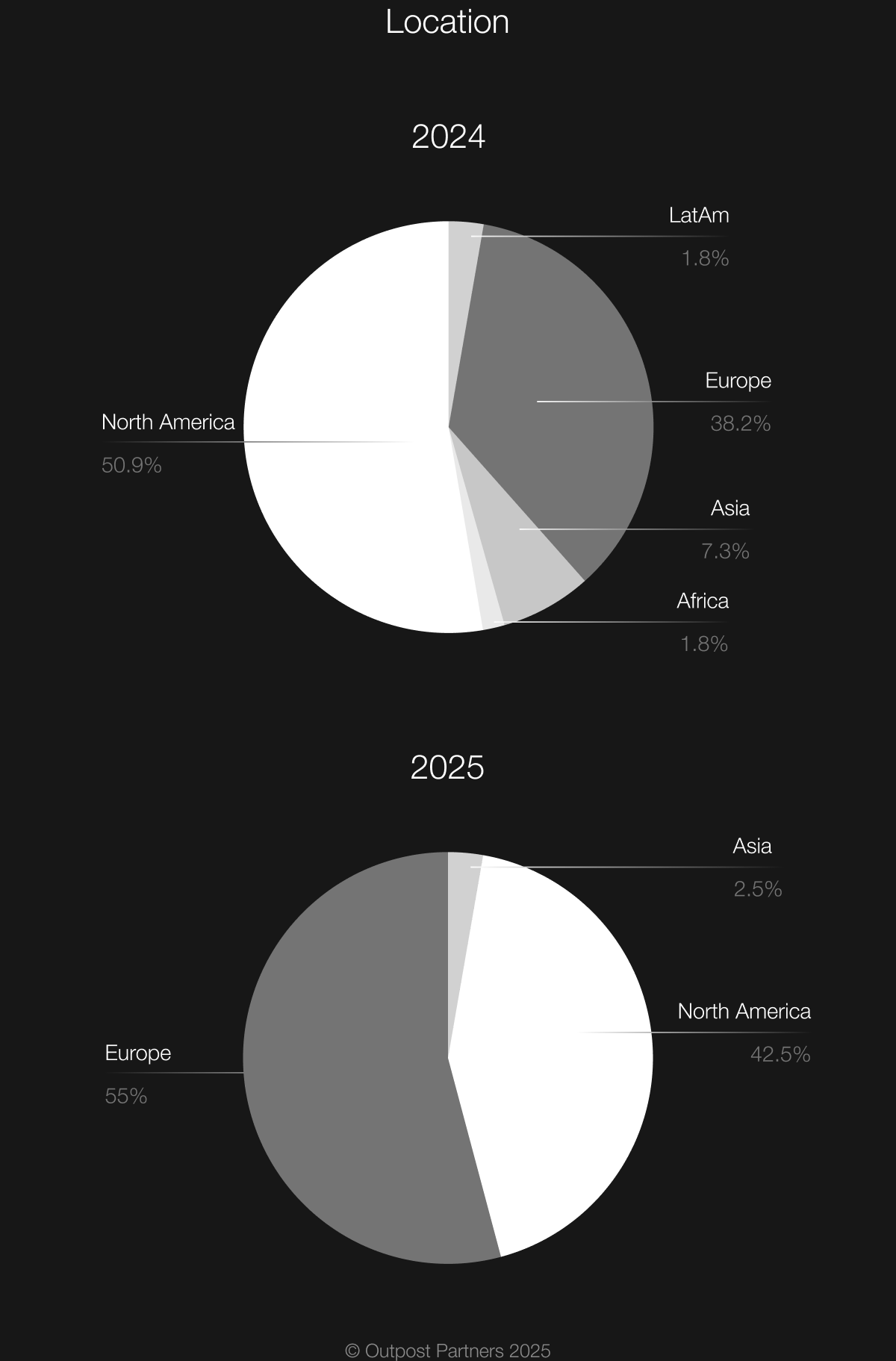
In 2024, most of the companies we reviewed came from North America. In 2025, that trend shifted—Europe became the dominant source of deal flow (including the UK). This shift is largely driven by the rise of generative AI, with a significant number of European companies focused on AI-based music tools and services.
Deal flow from Latin America and APAC remains limited. While we anticipate more opportunities emerging from regions like India and Southeast Asia, deal flow continues to be concentrated in the U.S. and Europe, where much of the global music infrastructure is still based.
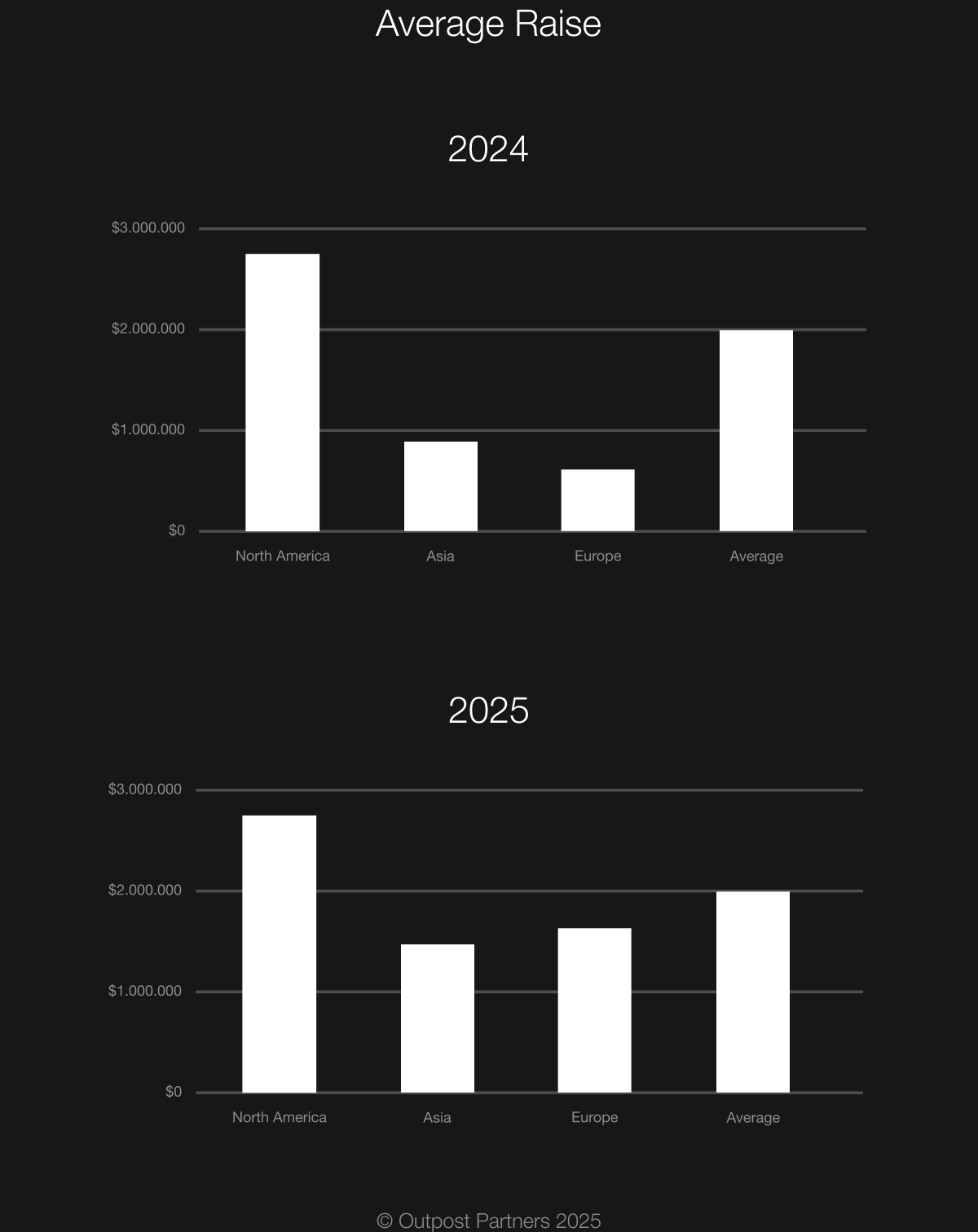
The average raise in early stage music tech has remained steady at around $2 million. The median is lower—closer to $1 million—as a handful of larger rounds ($5–7 million) inflate the average upward. While funding rounds in the U.S. declined, European companies have picked up momentum, balancing the overall trend. Notably, the few Asian deals we’ve seen this year also raised more than in the previous period.
In Europe, the average raise size has increased, driven by the rise of AI-focused companies that require significant investment in product development and R&D. The broader momentum around AI has also attracted a wave of new investors—many participating in one-off deals—which has contributed to a wider influx of capital into the space.
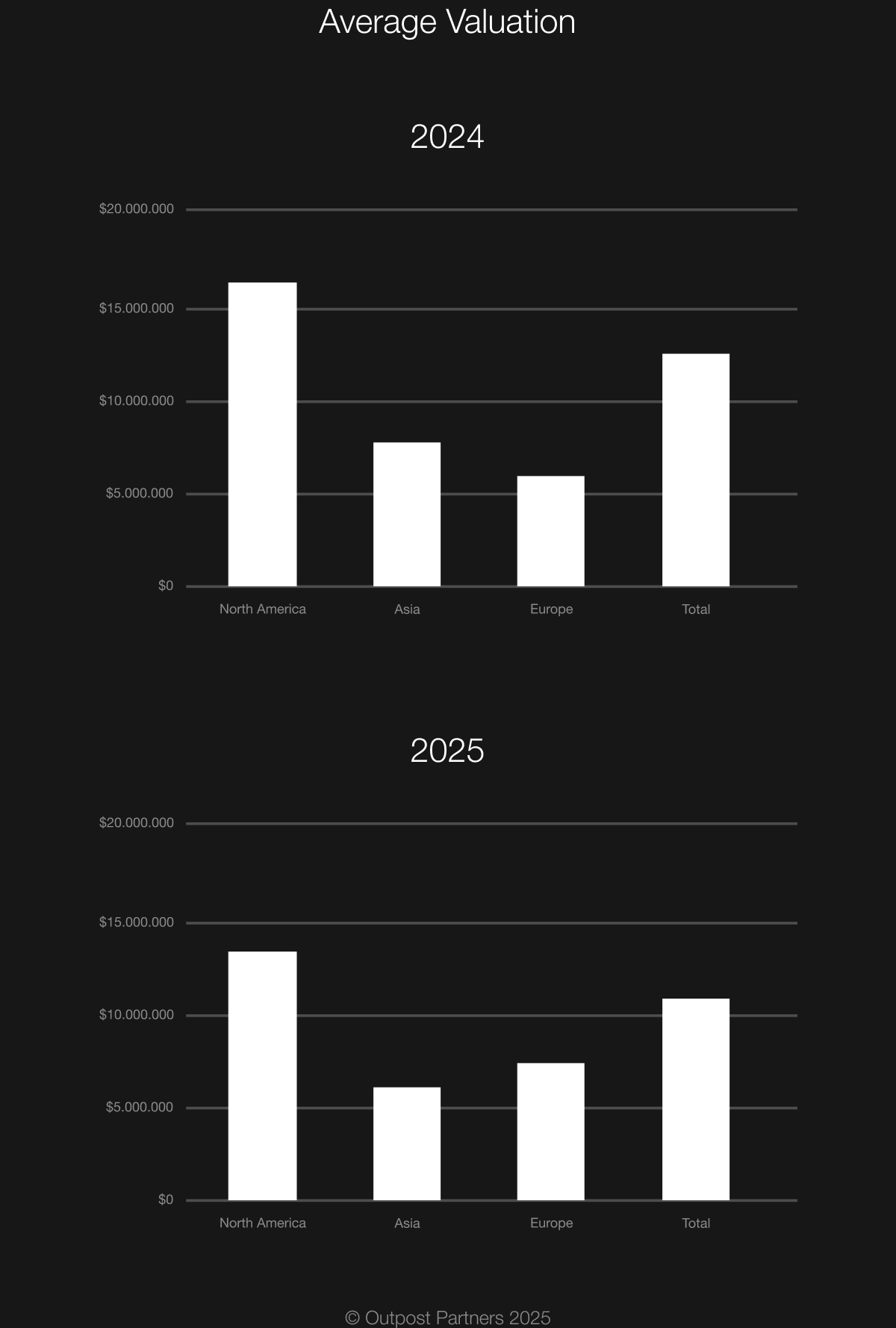
Average valuations in early-stage music tech have slightly declined year-over-year, driven primarily by a drop in U.S.-based deals. Median valuations sit around $7–8M, with U.S. companies still maintaining the highest averages overall. Recently, however, valuations have begun trending upward again—reflecting renewed confidence in the venture market.
A interesting pattern: companies raising at $12M+ valuations are more likely to close their rounds. This often stems from the need to accommodate lead investors with fixed playbooks—set check sizes, ownership targets, and valuation thresholds. As a result, valuations are frequently adjusted upward. Many of these leads are newer investors entering the market, drawn by AI momentum and its perceived potential in music.
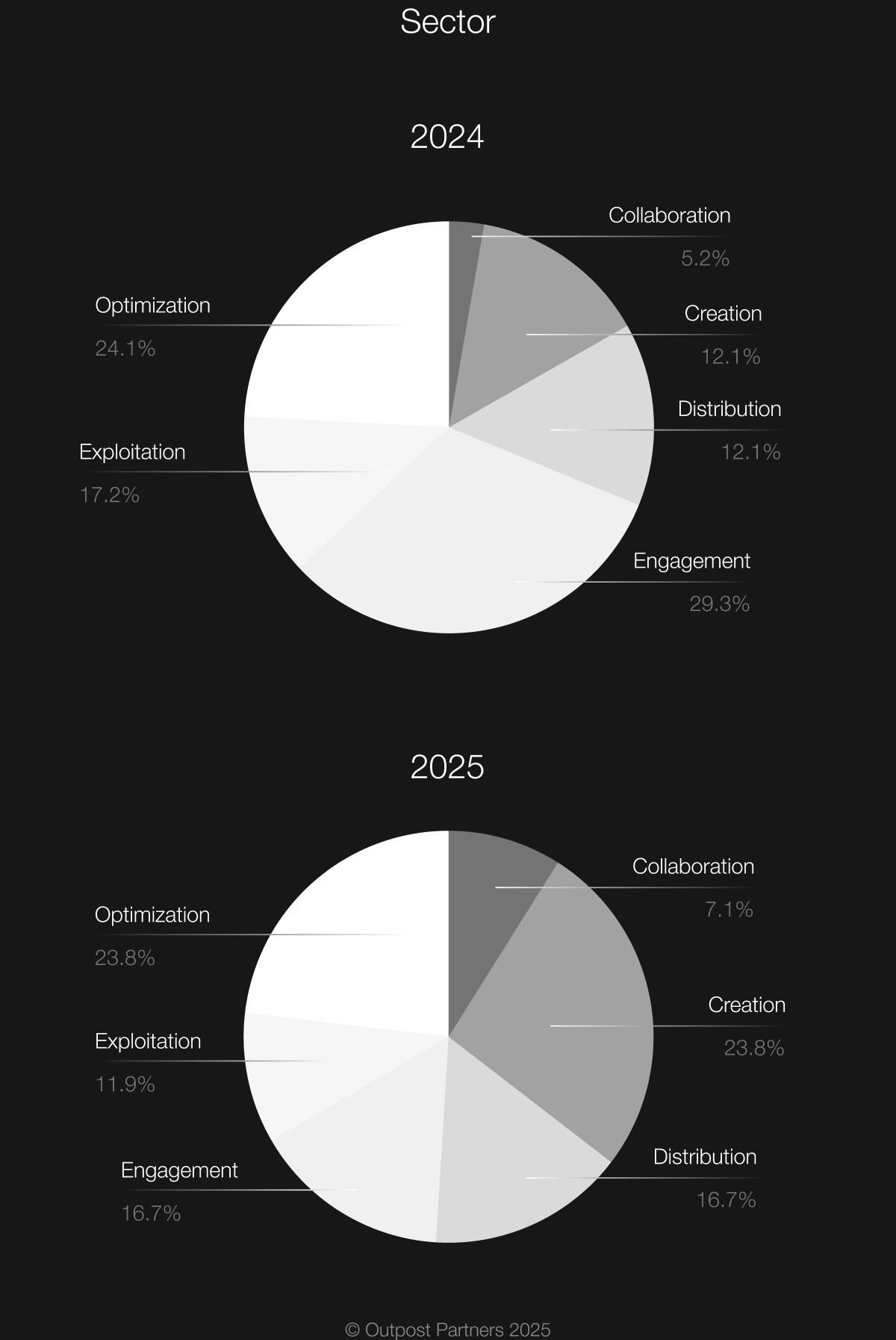
We’ve categorized the companies in our deal flow into six key sectors, each representing a distinct stage in the music value chain: Collaboration, Creation, Distribution, Engagement, Exploitation, and Optimization—moving from how music is made and shared to how it’s monetized and refined.
The Creation segment has shown the strongest growth, largely fueled by generative AI and DAW-like tools that help artists produce content more easily and efficiently. By contrast, Engagement—platforms designed to connect artists with audiences—has seen a noticeable decline. This drop is primarily due to the collapse of crypto-based startups in this space, which have nearly disappeared from the market in 2025.
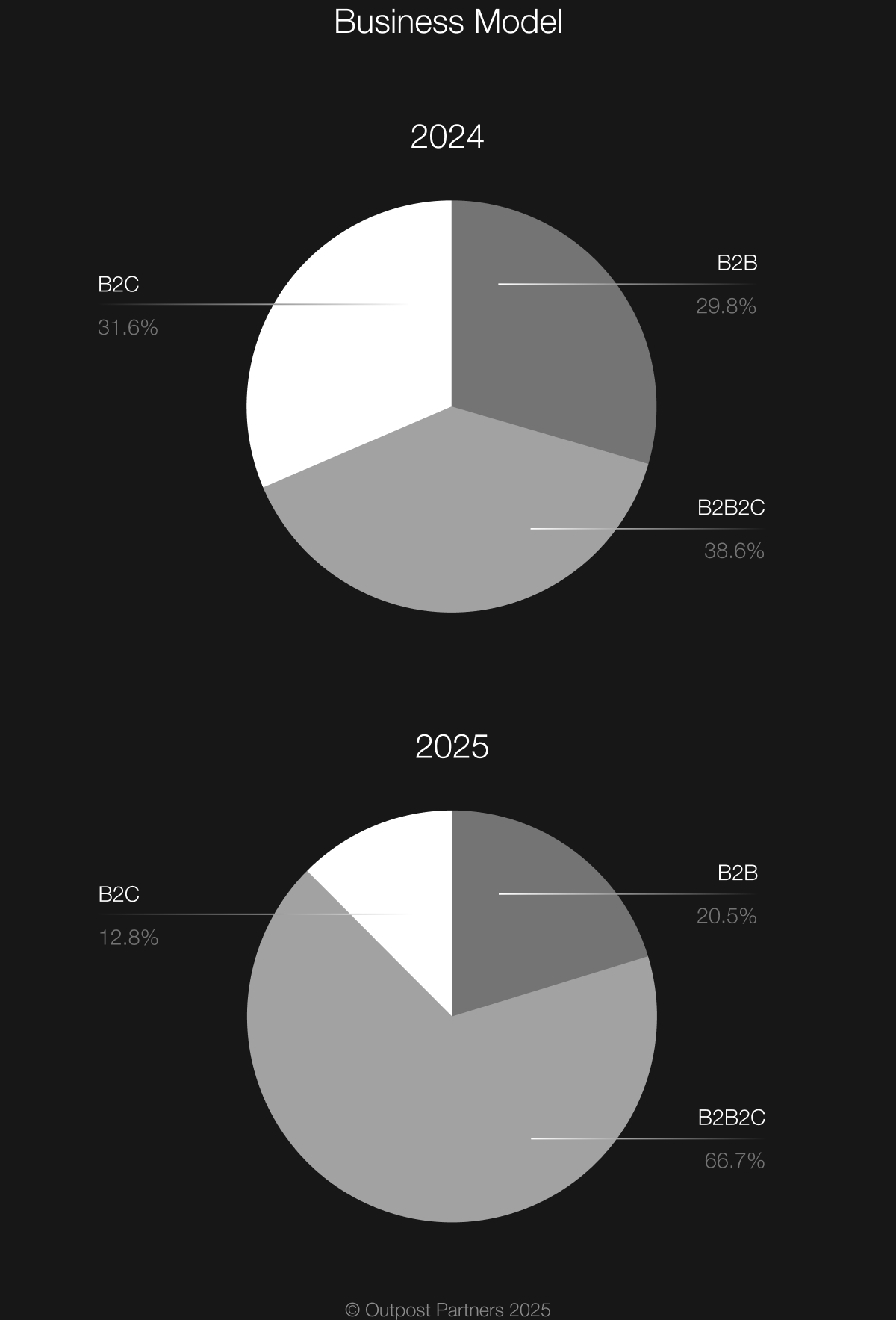
In 2024, business models across B2C, B2B, and B2B2C were relatively balanced. By 2025, however, B2B2C emerged as the dominant approach. This model reflects the growing number of startups integrating with third parties—whether via APIs, marketplaces, or rights platforms—to enable indirect access to consumers. A typical example: business-to-artist-to-consumer, where a platform empowers artists (as intermediaries) to reach end users. At the same time, B2C deals declined by roughly 50%, aligning with a one-third drop in deal flow from the Engagement segment noted earlier.
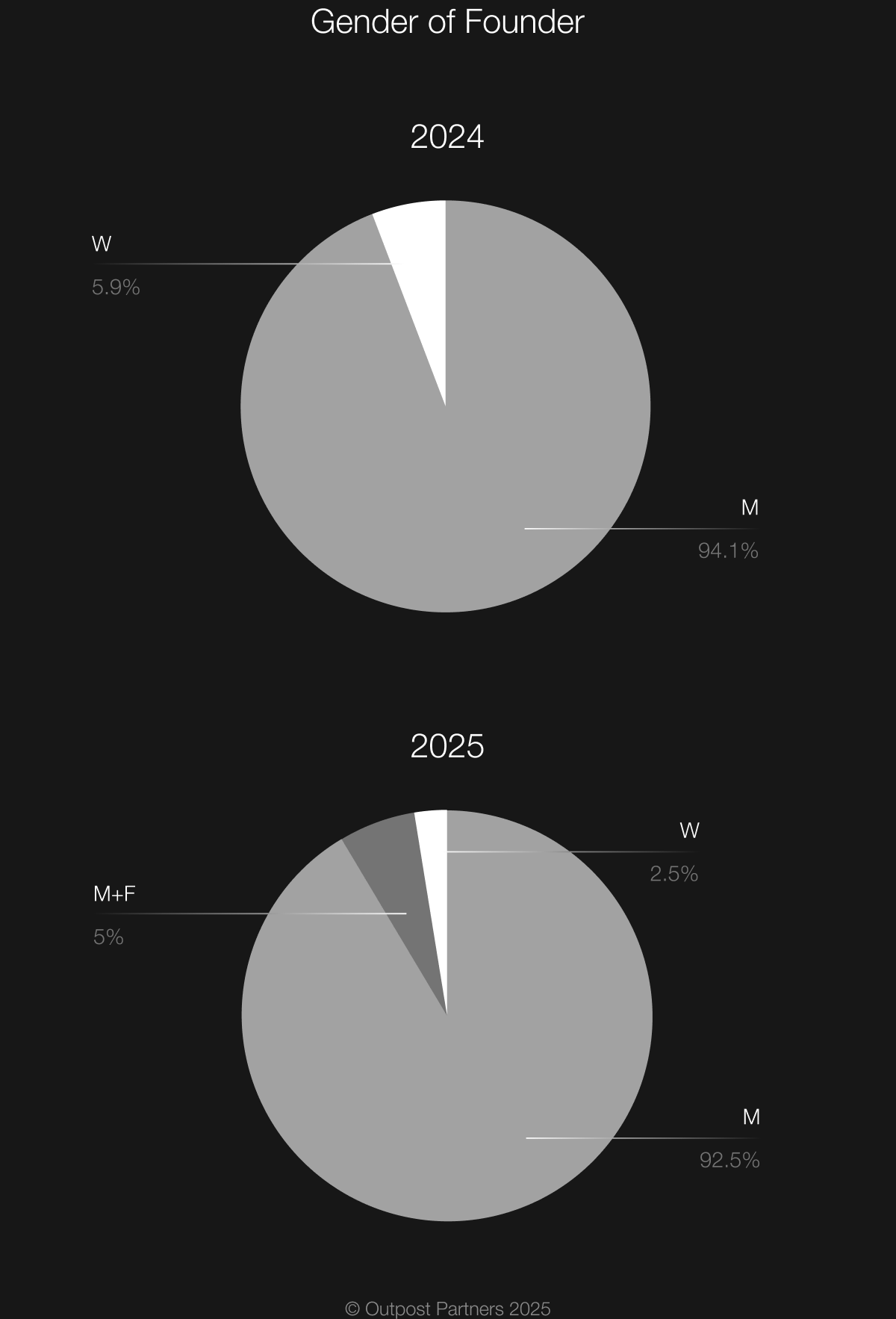
Gender diversity remains a significant gap in music tech. The vast majority of founders in our deal flow identify as male, with very few female-led or mixed-gender founding teams. This is especially stark when compared to the broader startup ecosystem: in 2024, around 18–20% of startups globally had at least one female founder (Atomico, 2023; Fast Company, 2024), while solo female founders accounted for fewer than 3% of funded startups (Harvard Kennedy School; FFVC, 2024).
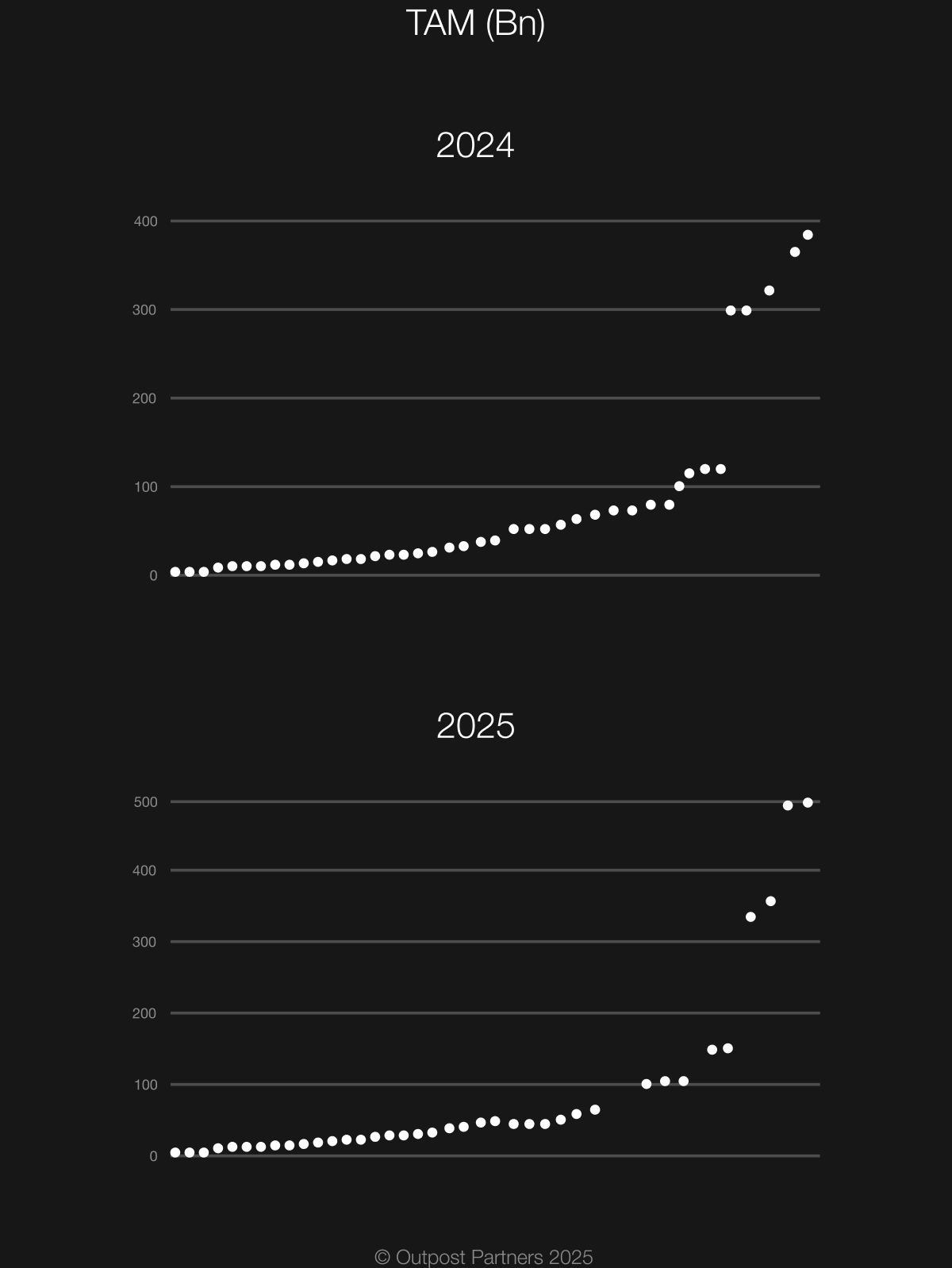
The way startups define their Total Addressable Market (TAM) varies widely. As outlined earlier, we estimate the music copyright industry at approximately $45B and the music tech sector at $7–10B. Despite this, many founders significantly inflate TAM figures—often to align with venture capital expectations, where larger markets imply greater potential for outsized returns, and to fit the venture capital playbook. We use TAM as a benchmark to evaluate how well founders understand the market they’re addressing—and to gauge where investor bias might be influencing the narrative.
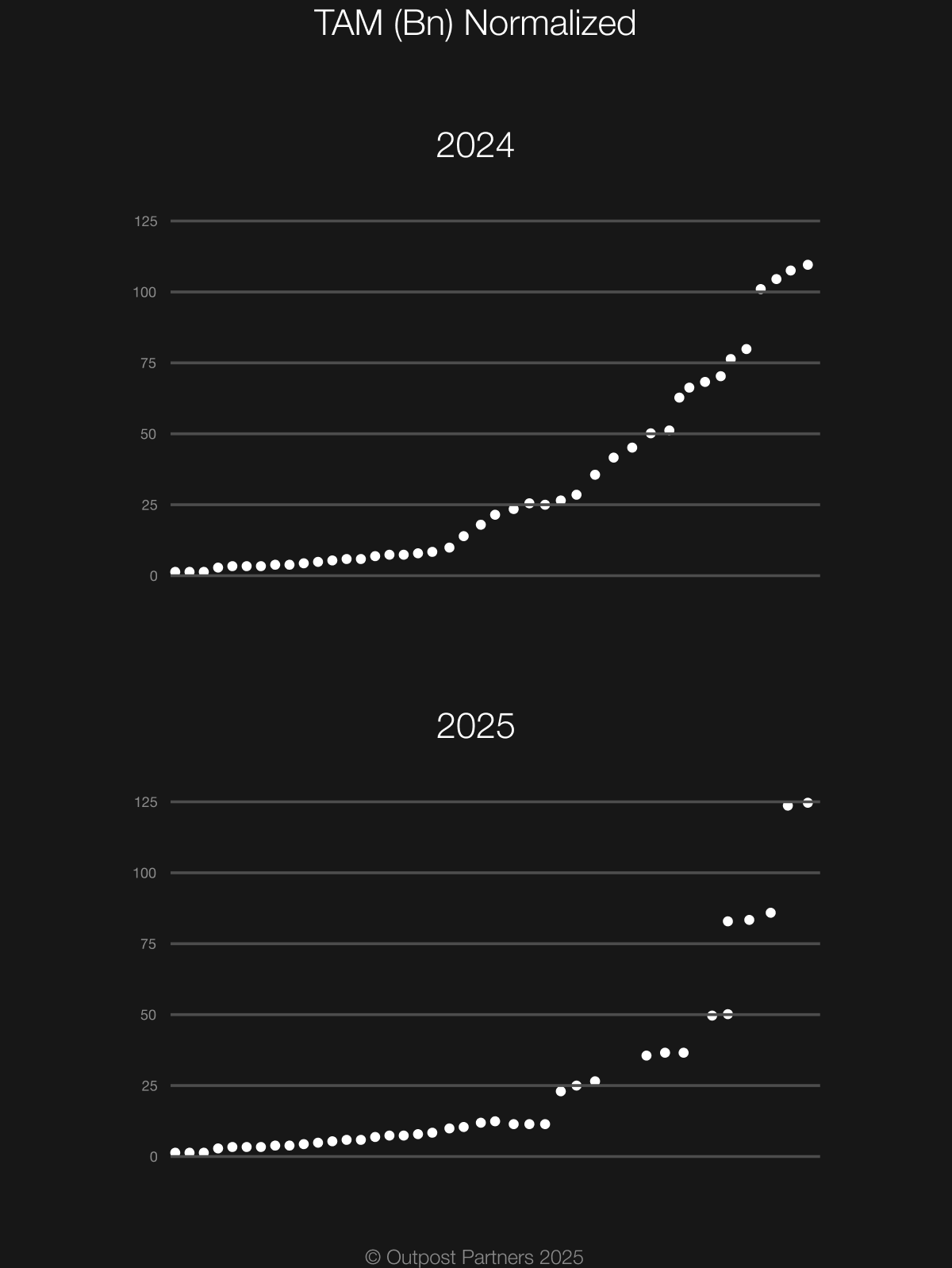
When normalized, a clearer pattern emerges: most startups position their TAM around or below $50B, with many falling under the $25B mark. While this suggests a more realistic view of market potential, TAM is often assembled by combining segments from multiple adjacent markets.
A common justification is the projected growth in the number of music creators—especially amateur and non-professional users. The global population of music creators is expected to grow from 104.4 million in 2023 to 244.5 million by 2031, driven by generative AI and the broader consumerization of creation (MIDiA, State of the Music Creator Economy, 2025).These projections are frequently used to support claims of expanding market potential, even when near-term monetization remains limited.
Based on the insights gathered from our research, we’ve distilled four key learnings that consistently shape outcomes in early-stage music tech. The underlying patterns behind these learnings were observed across both periods (2023–2024 and 2024–2025).
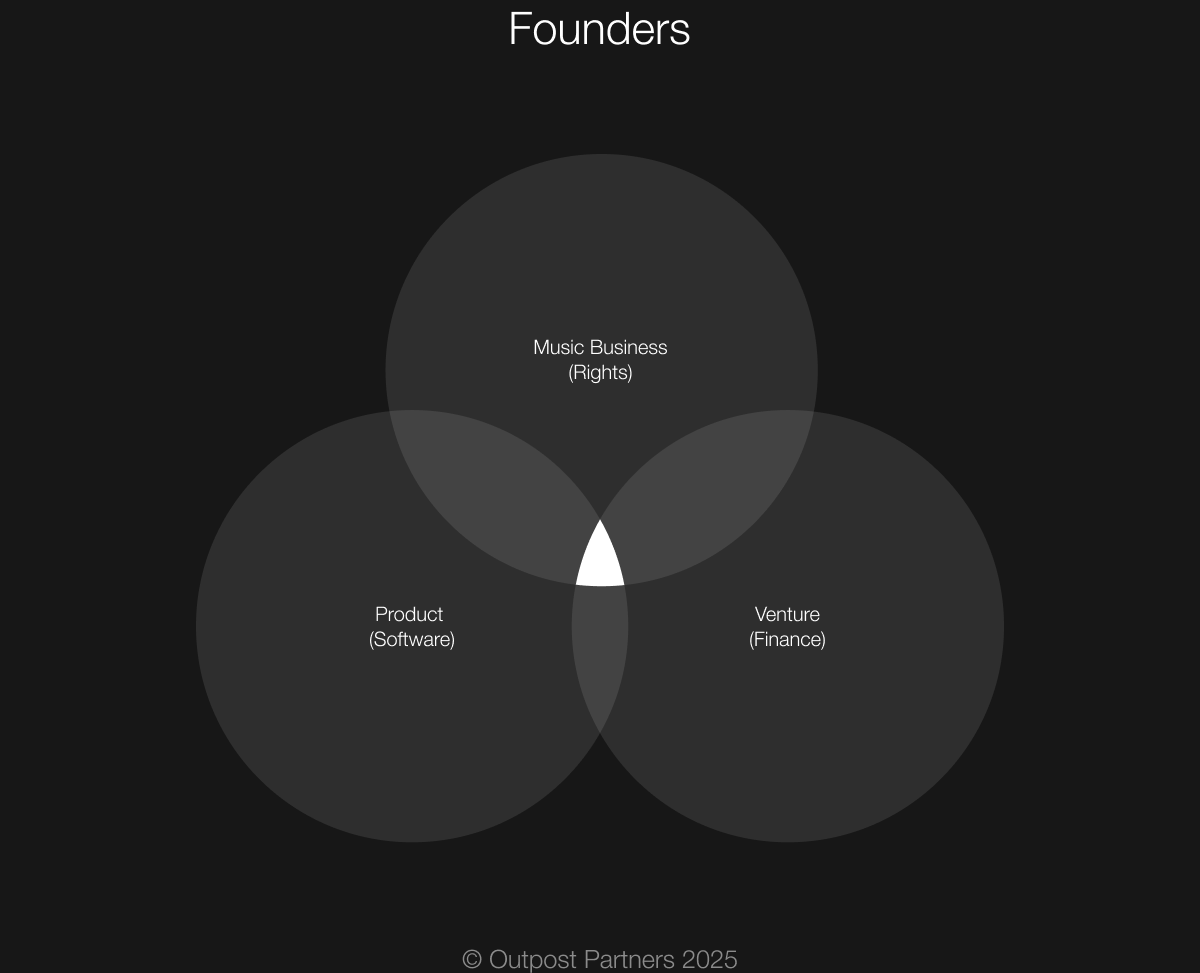
We’ve identified three common founder archetypes in the music tech space:
In funding cycles driven by hyped foundational technologies like AI or Web3, we’ve seen investor interest—and capital—flow into music tech at an accelerated pace. But in many of these cases, companies raising substantial funding often lack a true music business founder.
Venture investors, focused on underlying technology and scalability, tend to prioritize product and finance capabilities—while music-specific expertise is often treated as optional. In turn, founding teams without venture experience often carry misplaced expectations around fundraising.
Rights complexity, legacy infrastructure, and market dynamics demand deep domain knowledge. Without a music business founder, even well-funded ventures risk misalignment. In practice, they often act as a necessary voice of reason—helping ground the venture in both industry realities and expectations.
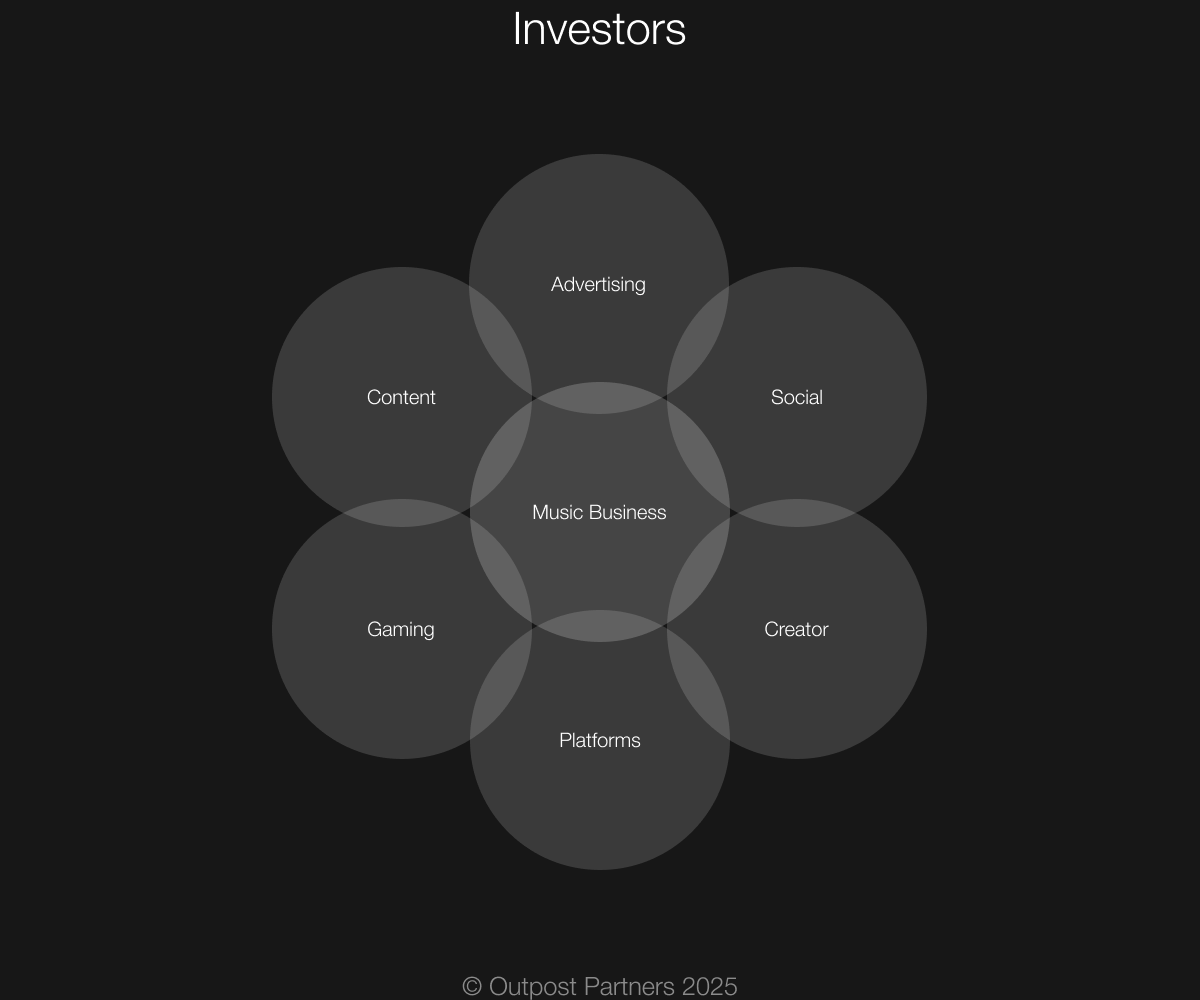
Music—and especially music tech—is a relatively small market compared to adjacent industries like gaming, social media, or advertising. Yet because music intersects with these sectors, investors from outside the space often enter seeking opportunities that align with their broader investment thesis, driven by a desire to participate in and engage with music.
The emotional pull of music resonates with investors and captures the imagination. But this can also lead to confirmation bias: investors may justify their bets by highlighting overlaps between music and their core markets (e.g., gaming), suggesting strategic fit. However, this often serves more to validate a familiar investment thesis than to reflect the actual standalone opportunity in music tech.
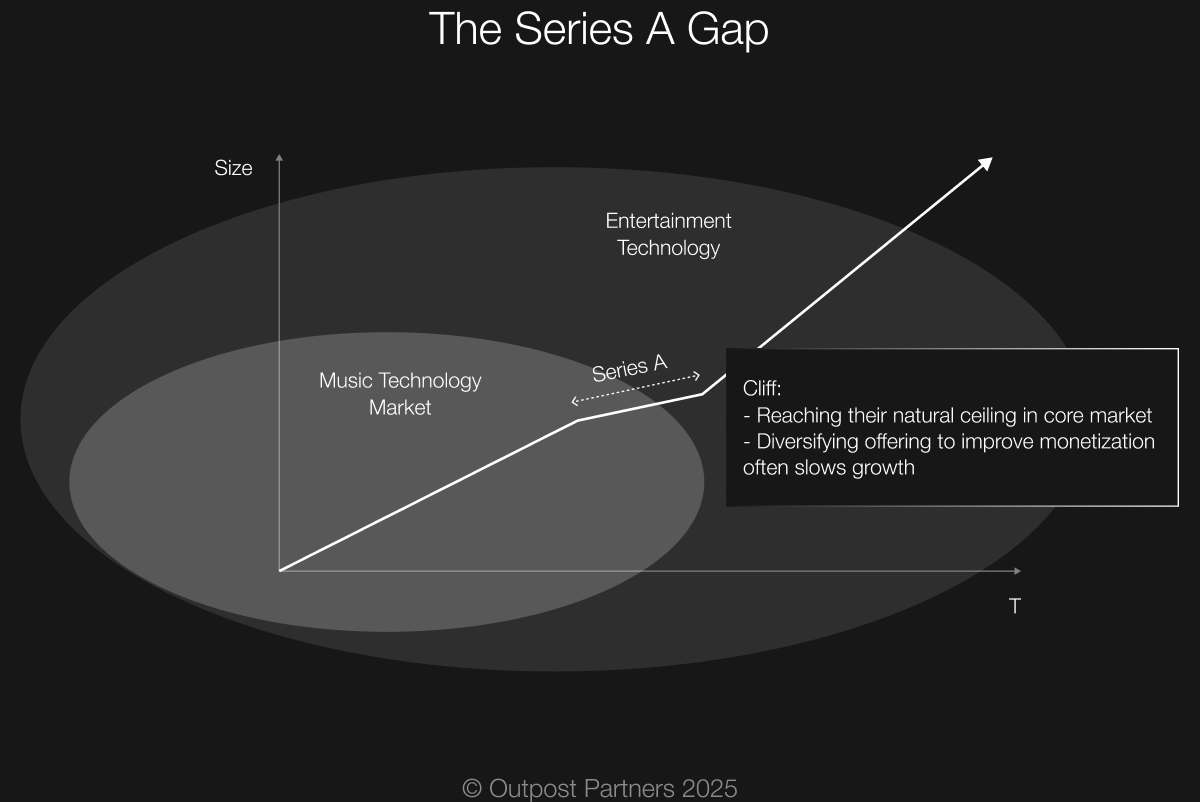
Some music tech startups move quickly, launching early products that gain traction and raise pre-seed or seed rounds with relative ease. But many hit a familiar roadblock soon after—a pattern we call the Series A Gap.
Because the market is still small and fragmented, founders often overestimate the size of their addressable customer base. After a strong seed phase, growth slows. Companies respond by shipping more product and improving monetization—boosting revenue per user, but flattening their growth curve in the process. This often puts them out of sync with what Series A investors are looking for.
The result: many end up in a kind of no man’s land—break-even and operationally solid, but no longer aligned with venture expectations. They struggle to raise further rounds and their venture-driven valuations often make it difficult for other types of capital to come in. Those that make it through often become category leaders.
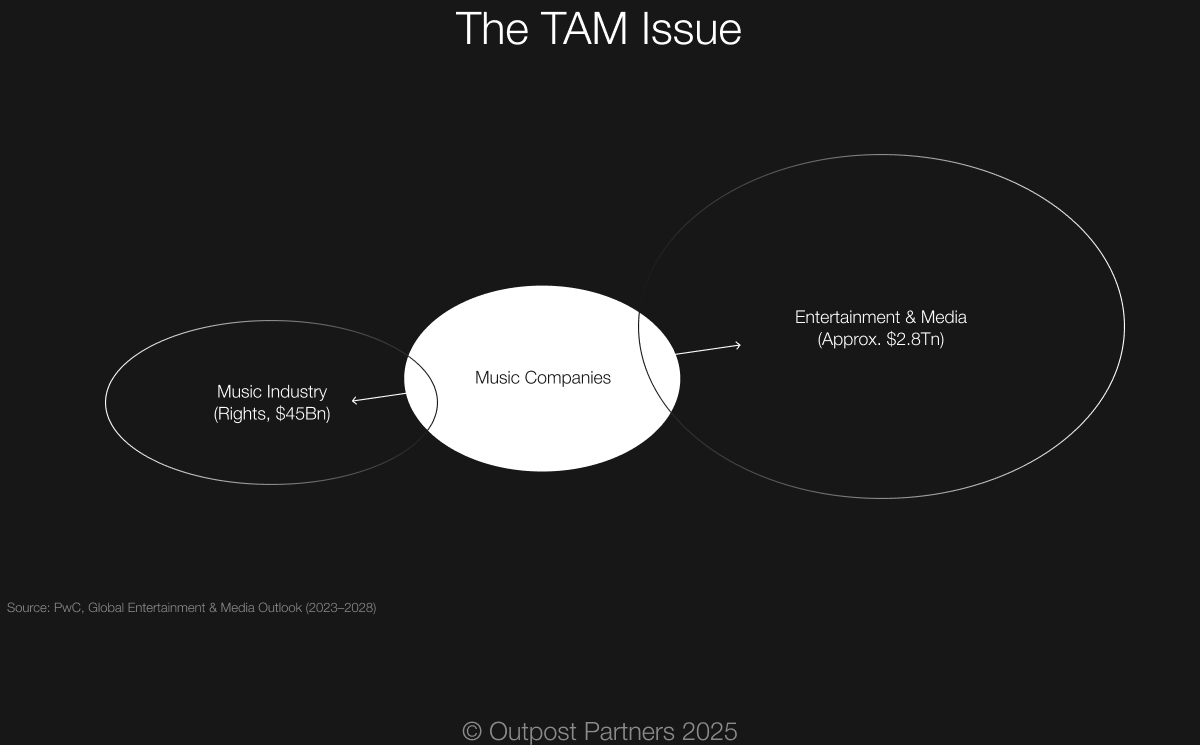
A common narrative among founders is the idea of “starting with music” and expanding into larger adjacent markets like gaming, social, or the broader creator economy. This is often framed as a response to concerns about market size and long-term upside.
In practice, this expansion rarely materializes. Music is a complex, highly specialized industry with unique rights structures and legacy infrastructure. Many startups underestimate the depth required to succeed—and remain in music longer than expected, without the scale to break into adjacent verticals.
This tension is reflected in the diagram above: music rights sit at ~$45B, while the broader entertainment and media market exceeds $2.8T (Source: PwC, Global Entertainment & Media Outlook 2023–2028). The gravitational pull of larger markets is real—but building from music outward requires more than a compelling narrative. It demands category leadership within music, followed by the infrastructure and capital to scale beyond it. To date, we’ve yet to see a music-native company successfully expand and dominate an adjacent industry.
in case you are interested in collaborating please reach out over: contact@outpost.partners
This website uses cookies to improve user experience. To learn more take a look at our Privacy policy.
By selecting "Accept cookies" on this banner, you agree to the use and storage of cookies on your device.